

Make an Impact in the Community.
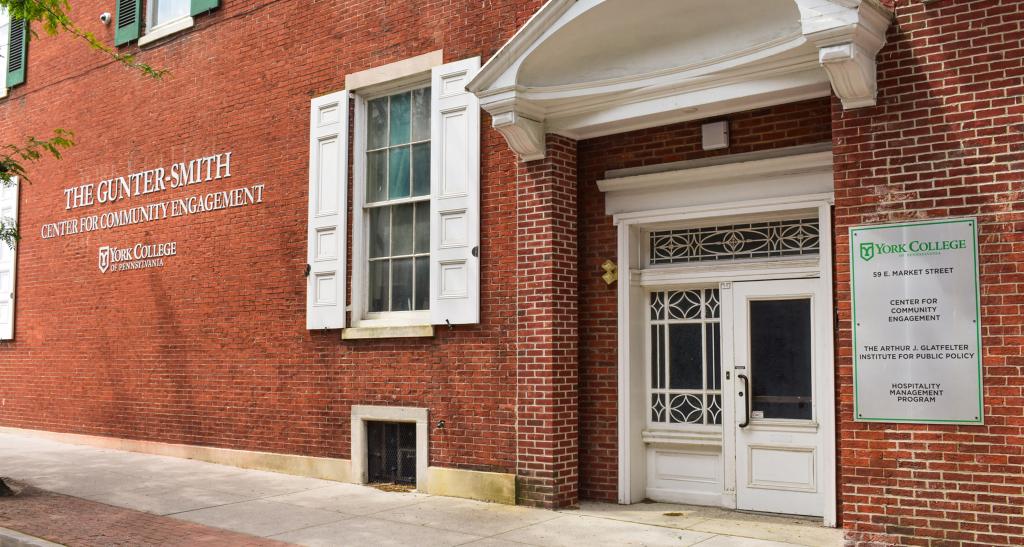
The Urban Collaborative is a donor-supported initiative of the Center for Community Engagement (CCE).
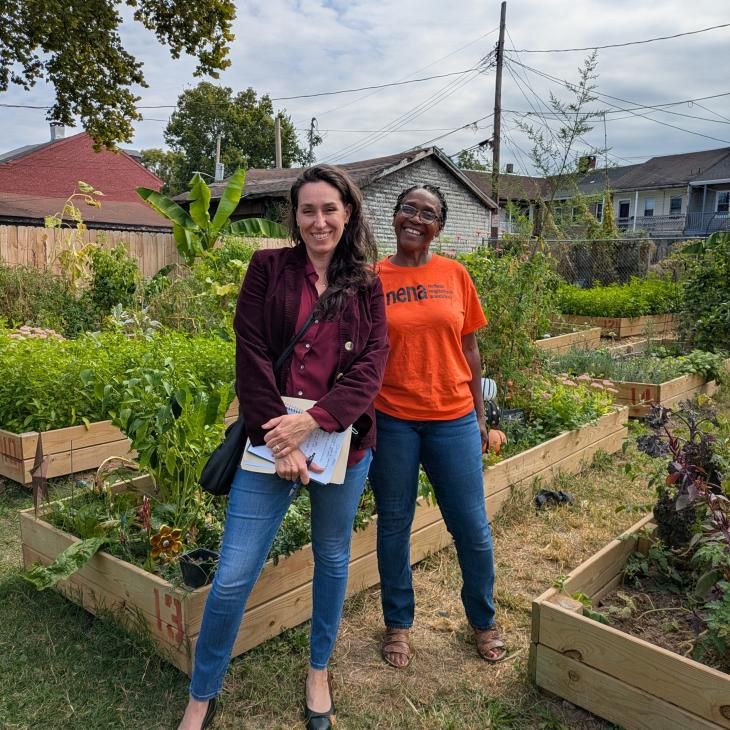
Alongside community partners, it engages students and faculty from multiple disciplines in project-based research that tangibly supports an improved quality of life in York City.
The project will move from research to action steps to revitalize distressed real estate (residential and/or commercial) in York’s neighborhoods through the empowerment of, and support for, those who live in those neighborhoods.
Learn More
Using a Project-Based Learning model, the Urban Collaborative engages York College faculty and students in mutually beneficial projects that connect students to the community, facilitating understanding, and promoting problem-solving through research and new ideas. We work alongside community partners to improve the quality of life in York’s neighborhoods and to support the accessibility of home ownership and economic opportunities to those who live here.
We believe that:
- The stability of a community is enhanced by home ownership and related economic opportunities for its residents.
- Achieving economic mobility and equity requires a combination of educational, financial, and intellectual support.
- Economic mobility is best achieved in partnership with residents—not top-down.
- Academic institutions can support this work with reliable data and analysis.
- This work is mutually beneficial for our students and the community.
In the short term, the leadership at the Center for Community Engagement aims to:
- Engage appropriate faculty and students (graduate and undergraduate) in the efforts of the Collaborative.
- Work with faculty to develop course-based and co-curricular projects.
- Support community partners in projects aimed to improve quality of life in the City of York.
- With support from our donor, and with the cooperation of the Redevelopment Authority and other City agencies, it is our intent to facilitate the acquisition and renovation of residential and/or commercial real estate with the goal of making that real estate available to neighborhood residents.
- We will support workforce development initiatives that provide gainful employment opportunities to city residents with the dual purposes of economic stability and reduced recidivism.
In order to accomplish the goals of the initiative, we will:
- Engage the community to identify meaningful, quality of life projects for students and faculty.
- Develop and facilitate relationships with key community partners who will support students and faculty in their research.
- Gather data on research areas and partners to better understand the needs of underserved communities.
- Analyze the elements of healthy neighborhoods, including green spaces.
- Analyze gathered data to promote successful strategies for neighborhood revitalization without displacement of residents.
- Create action proposals for grants or other funding.
- Work toward programs that enable residents and partners to acquire, renovate, and facilitate the sale of property or the development of safe, affordable housing.
In addition to the leadership of the Center for Community Engagement, the Urban Collaborative will involve:
- The J.D. Brown Center for Entrepreneurship and the Graham Center for Collaborative Innovation.
- The Lifelong Learning Institute.
- York College faculty, staff, and students.
- Local non-profits organizations and government entities.
- Community partners and residents.
We invite faculty to partner with the Urban Collaborative, particularly through a community-based learning course or unit. For example:
- Students in a history course studied the genesis of policies in York that have led to current inequities, and made recommendations on how we might move forward in more equitable ways.
- Students and faculty with Geographic Information Systems (GIS) experience mapped area neighborhoods in ways that helped clarify the assets and deficiencies of specific neighborhoods.
- Faculty and students collaborated with the York County Planning Commission (YCPC) to develop a marketing strategy for a HUD-funded lead paint abatement program. The project focuses on identifying vulnerable residents to build a waitlist ahead of a 2027 production grant.
- A Human Resource Management class partnered with the nonprofit Friends & Neighbors, who provide services to the unhoused population, to professionalize their HR infrastructure as the organization expands.
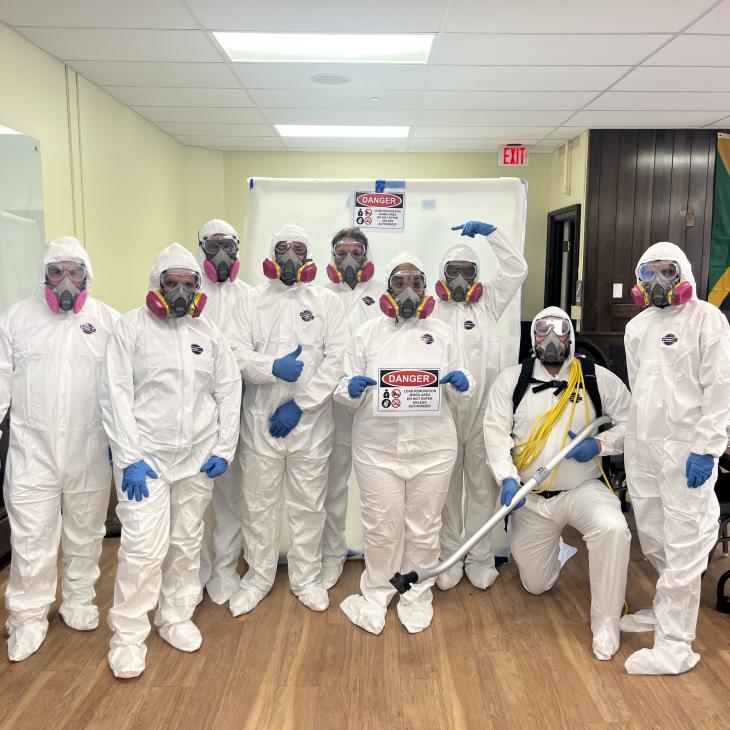
Lead Training
Utilizing funding from the York County Planning Commision, the CCE has partnered with York College of Pennsylvania's Engineering department and local experts to develop EPA approved, accredited lead certification training opportunities for the local workforce. Accredited courses, led by certified instructors, are offered at the Gunter-Smith Center regularly to ensure York's workforce is equipped to carry out critical remediation and abatement work to keep local families safe from the harms of toxic lead paint. For more information about upcoming training opportunities, please contact the Center for Community Engagement.
Beyond the Data
Beyond the Data features research and analysis from York College of Pennsylvania’s Urban Collaborative Scholars-in-Residence, exploring issues that impact York City and the surrounding community.
Hannah Zinn | August 7, 2026
Careers in the skilled trades offer pathways to employment through specialized training in fields such as construction, manufacturing, agriculture, and maintenance. This article explores the value of these careers in York, including workforce shortages, barriers to entry, the potential impact of artificial intelligence, and opportunities for training and apprenticeships.
Hannah Zinn | March 23, 2026
As housing costs rise, more individuals and families are turning to nonprofits and government programs for support while many of those same organizations face uncertainty surrounding their own funding. This article examines the challenges facing York’s housing nonprofits and considers strategies for building financial and organizational resilience.
Hannah Zinn | October 21, 2025
Historic redlining shaped more than housing opportunities in York. Its effects can still be seen in the distribution of trees and greenspace throughout the city. This article examines the connection between York’s redlining history and present-day tree equity while highlighting ways residents can engage with parks, gardens, and environmental initiatives.
Kristie Houck | April 18, 2025
Homelessness and affordable housing policy in the United States have developed through decades of federal and state action. This article traces that history, examining major housing policies, federal approaches to homelessness, and more recent policies affecting people experiencing homelessness.
Kristie Houck | November 24, 2024
The Family Self-Sufficiency (FSS) program helps families receiving housing assistance work toward greater financial independence by setting goals, increasing income, and building savings through an escrow account. This article examines how FSS works, how programs operate in York County, and the barriers participants may face as they work toward goals such as employment, education, homeownership, and long-term self-sufficiency.
Kristie Houck | August 28, 2024
York City’s aging housing stock creates an ongoing risk of lead exposure, particularly for young children. This article examines the history and health effects of lead poisoning, disparities in exposure and testing, and the policies and resources available to address lead hazards in York.
Kristie Houck | July 24, 2024
The U.S. Supreme Court’s decision in City of Grants Pass v. Johnson changed how municipalities may enforce public-camping ordinances. This article examines how the ruling may affect people experiencing homelessness, the cycle of recidivism, access to housing and support services, and its potential implications for York City and York County.

A note from our funder
I grew up in Towson, Maryland, but my dad’s business was in York, and that is where I had my first “paying” summer job. I went to college and law school in Massachusetts and practiced law there as well. Following my dad’s death in 2015, I found myself again in York, in part because of his businesses and in part because of the foundation that he started to support York College’s chemistry and engineering departments. It was through this work that I had the opportunity to meet President Gunter-Smith and eventually serve the College as a member of the Board of Trustees. I quickly fell in love with the college, its mission, and the genuinely caring environment that seemed to permeate the campus, from students to administration to faculty. I was particularly intrigued by what I heard about “project-based learning.”
I was soon visiting York almost monthly and began thinking about buying a small house in the city. To my amazement, some houses were on the market for $29,000; however, I soon learned that $29,000 really did not buy a roof over your head. One home I saw did not have a functioning kitchen and had a roof that was caved in causing the floor to collapse. For the next few weeks, I was haunted by the thought of how someone can have a chance at life when growing up without a safe and secure home.
I do not know all the causes of urban decline and decay, nor what complex set of solutions may be needed to turn the trajectory for York to a new and more promising future. But, I think engaging the York College Community in better understanding the City’s history, neighborhoods, and general decline will provide a framework to coordinate the collaboration between neighborhoods, educators, health care providers, businesses, government offices and agencies, for-profit and nonprofit organization, for a healthier, more prosperous, and more equitable city and future. It is my hope that the York College Urban Collaborative will be a vehicle to help power that future.
—Lisa Fast, Funder of the Urban Collaborative
Contact Us
Jess Zartman
Director of the Urban Collaborative
717.815.1942
jzartman@ycp.edu
Hannah Zinn
Urban Collaborative Scholar in Residence
hzinn@ycp.edu