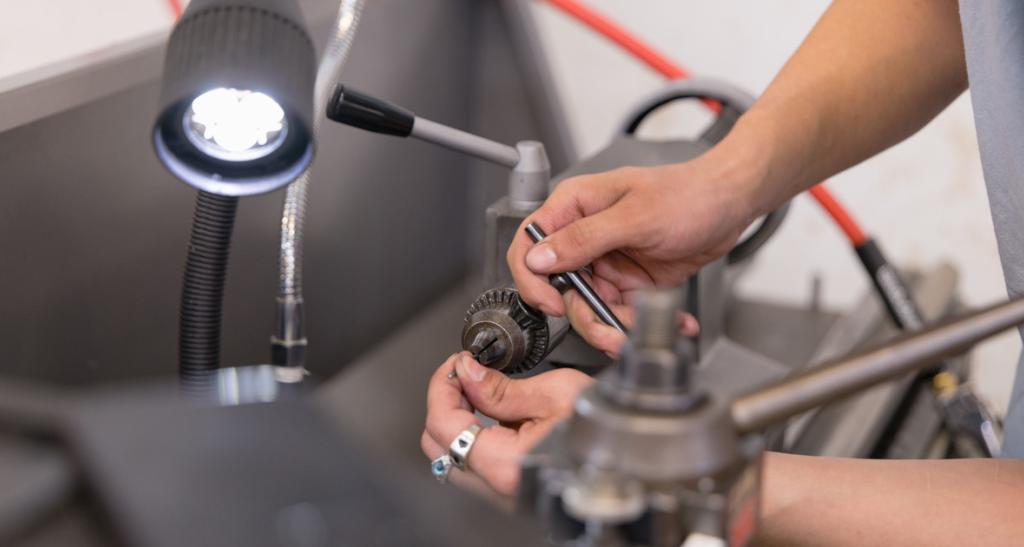
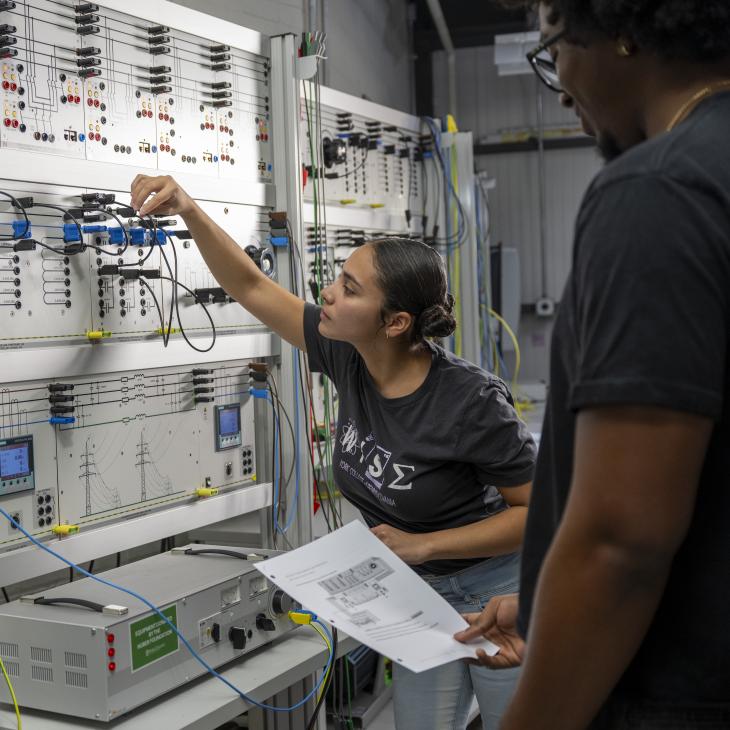
A student works with precision equipment in an engineering workshop.

Engineering and Computer Science Projects

From first-year classrooms to national competitions, our students learn by doing.

Two students work on a circuit board.

Hands-On Engineering

At York College of Pennsylvania's Kinsley School of Engineering, Sciences and Technology, students don't just study engineering, they build it. From first year through senior capstone, our students apply classroom theory to hands-on projects: designing an award-worthy Formula SAE race car, engineering a solar-powered lighting system for a remote village, building a software-defined radio, and preparing an eVTOL aircraft for national competition. These projects reflect York College's ABET-accredited, project-based approach to education, where students solve real problems, work across disciplines, and graduate with the practical experience employers are looking for.

First Year Projects

From day one, first-year students work in teams to design and build hands-on solutions to real problems.
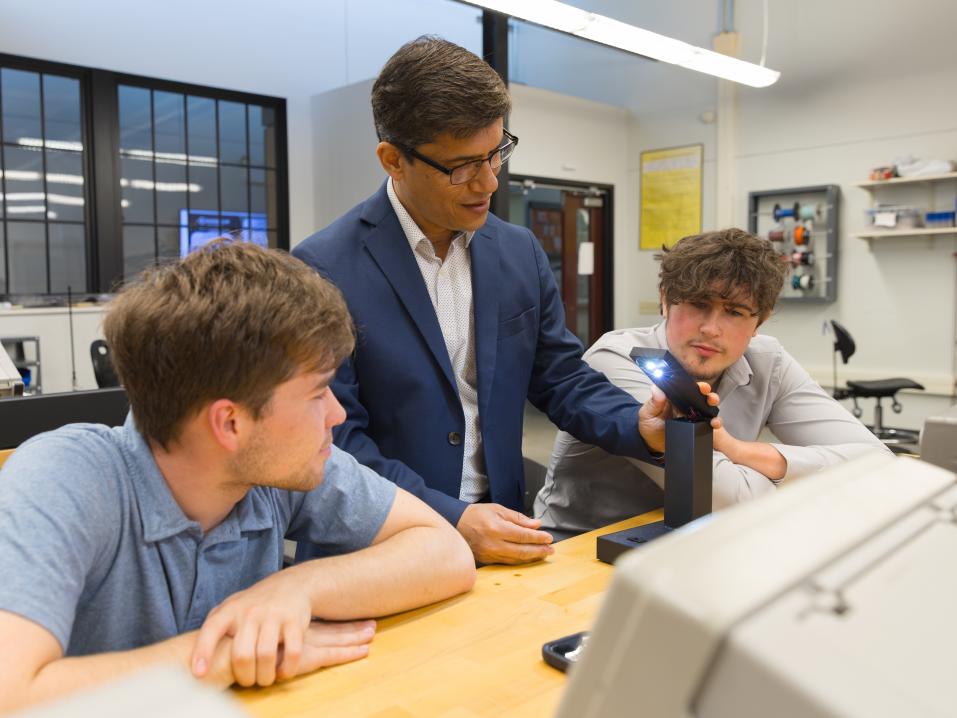
College students with a professor examine a light engineering project in a lab.

Let There Be Light

What if your first engineering project could change how an entire community lives after dark? In ECE100, you'll be challenged to design a portable, solar-powered lighting system for a remote village of 500 people who currently rely on candles and kerosene lamps for light. Using a shared solar charging station in the village square, your device will need to store enough energy during the day to provide safe, reliable light for reading and writing at night. It must turn on automatically only when needed and hit at least 80% electrical efficiency. Your prototype will also need to be low-cost, energy-efficient, easy to recharge and operate, and built to withstand dust and moisture. It's a hands-on introduction to combining electronics, sensors, renewable energy, and human-centered design to solve a real global need.
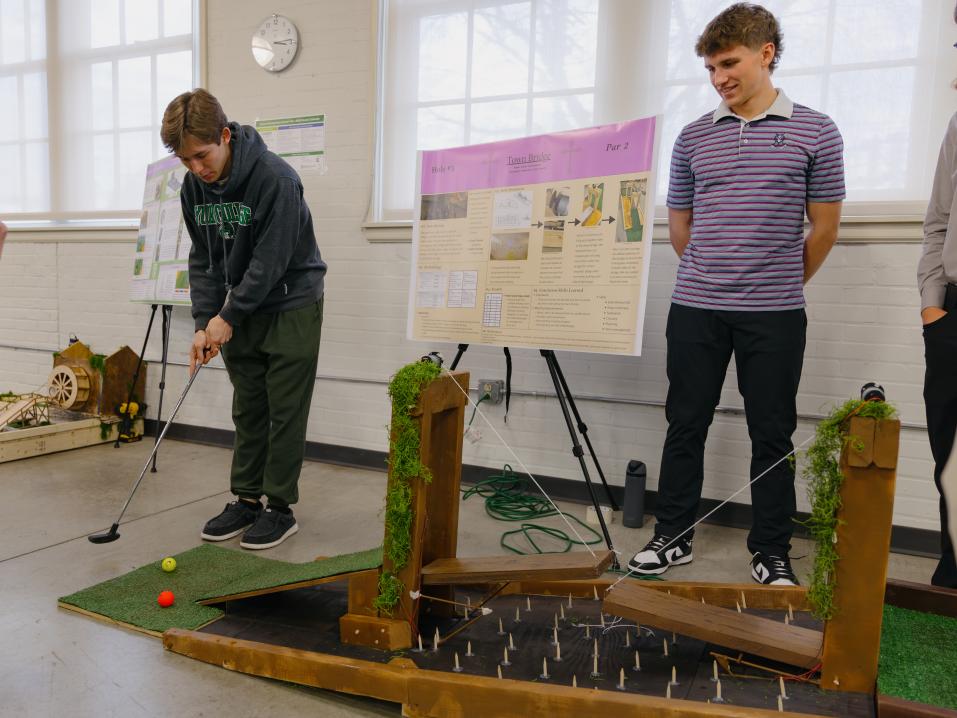
Students demonstrate a student-designed miniature golf course during a college engineering project showcase, with a poster presentation and hands-on testing of the course.

Miniature Golf

In FYS115, your entire first-year class of Mechanical, Civil, Electrical, and Computer Engineering majors teams up for a project unlike any other: designing and building three themed miniature golf courses, together. You'll create 3-D solid models and get hands-on with 3-D printers, metalworking, and woodworking machines to bring your holes to life. Then, you'll add microcontrollers, electric motors, and electronic sensors to make each hole interactive. It all comes together on mini golf night, when family, friends, and the community come out to play the courses you built and celebrate your first big engineering win.

Engineering Design Challenges

Students design, build, and test their own prototype devices, tackling a new challenges every year.
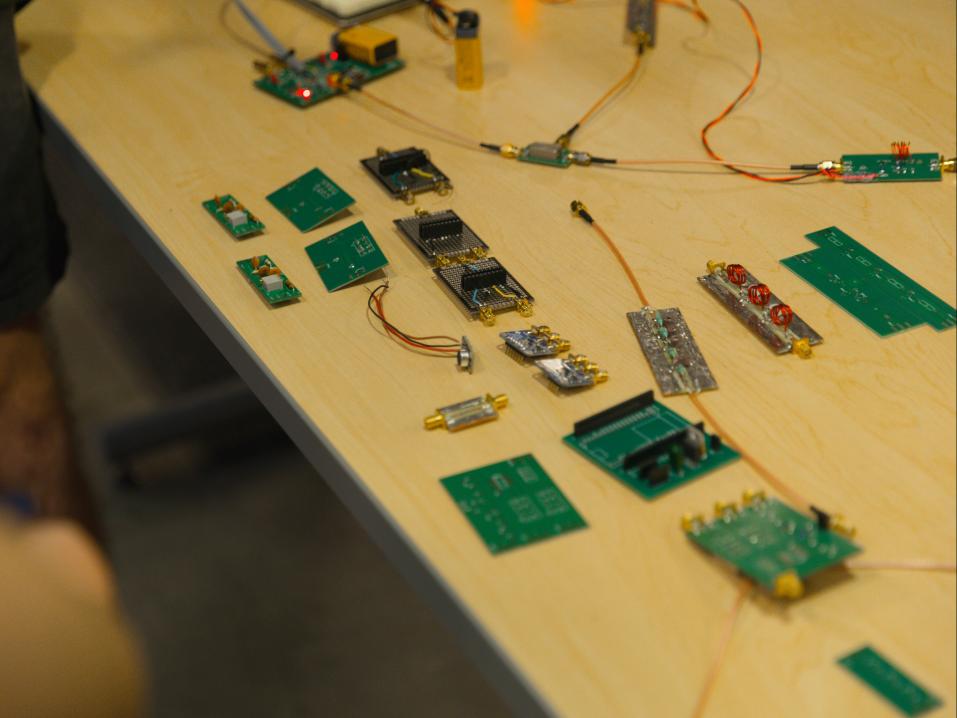
A tabletop covered with various electronic circuit boards, modules, cables, connectors, and other hardware components.

Software Designed Radio Project

What if you could build a radio that runs almost entirely on code? That's the idea behind a Software Defined Radio (SDR), which replaces traditional analog hardware with flexible, software-based components so it can operate across a wide range of frequencies. In this project, you'll design and build a functional SDR capable of transmitting and receiving signals using amplitude, frequency, and quadrature modulation. Along the way, you'll get hands-on experience with real-world communication systems, including signal modulation, data encoding, and the integration of analog and digital electronics. You'll leave with stronger skills in embedded programming and system-level design, the same skills used to build the communication systems behind everyday technology.
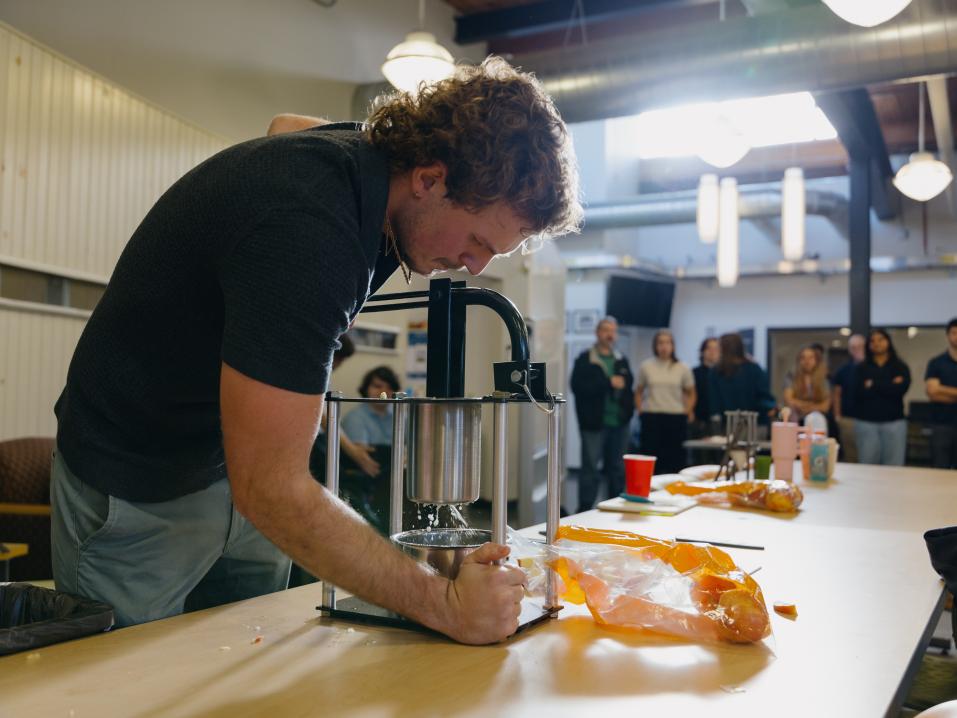
A student operates a manual apple press at a table, pressing chopped apples into a container. People watches in the background inside an engineering lab.

Machine Design

Every year, ME380 students design a prototype device from scratch, and no two years look the same. Past projects have included black walnut crackers, sawdust pellet presses, wind turbine prototypes, and water pumps for remote areas. In 2025, the challenge was a kitchen apple juicer. You'll design and analyze your device, then build a working prototype to demonstrate at the end of the semester. Along the way, you'll be pushed to balance competing priorities like size, weight, efficiency, safety, and aesthetics, real trade-offs engineers face every day.

Capstone Projects

In their final year, students apply everything they've learned to a real, hands-on engineering challenge from start to finish.
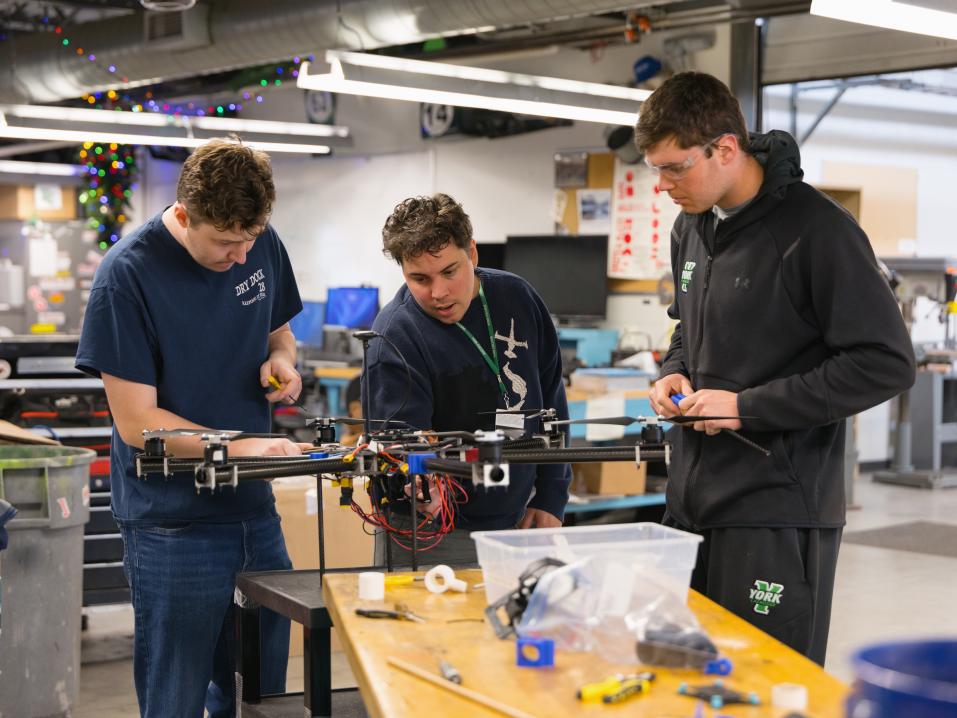
Students work together to build and test a drone in an engineering lab.

Drone Capstone

York College's Spartan Skyforce team was one of only 20 colleges and universities nationwide selected to compete in the 2025-26 Vertical Flight Society Design-Build-Vertical Flight competition. Fifteen senior Electrical and Mechanical Engineering students designed, built, and flew a six-motor electric vertical takeoff and landing (eVTOL) aircraft tailored to a wildfire emergency response mission, complete with autonomous flight and AI-assisted targeting. Faculty called it the strongest showing they've seen from the program to date.
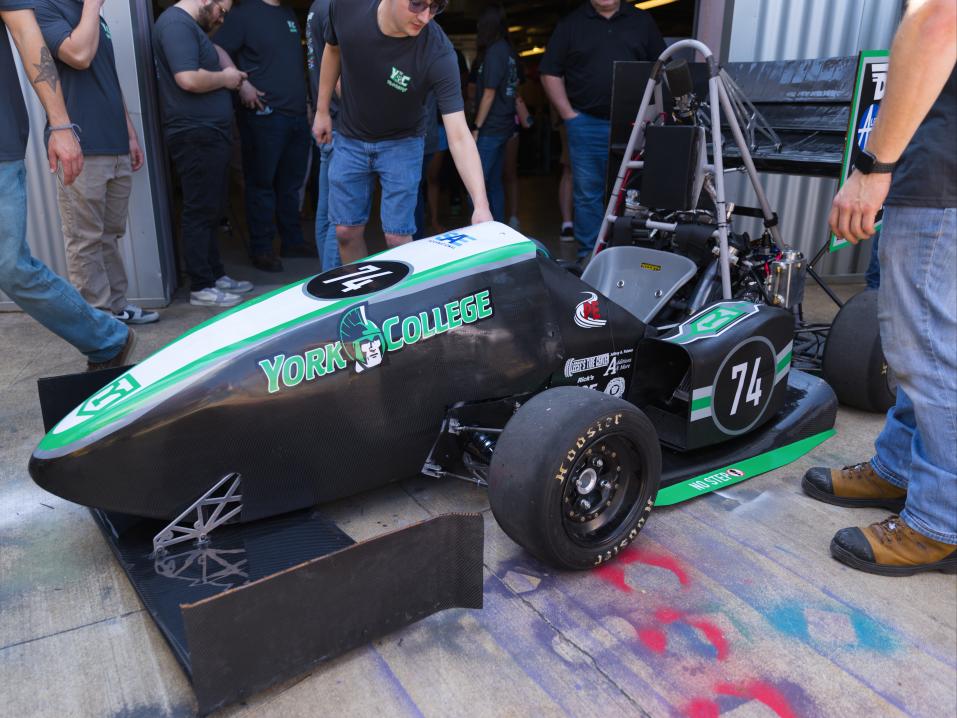
Students showcase a Formula SAE race car at a college engineering event.

Formula SAE Capstone

Every year, Mechanical, Electrical, and Computer Engineering students team up to design, build, and race their own open-wheeled Formula-style race car, then take it to Michigan International Speedway to compete against other colleges and universities in both racing and design judging. Students split into subteams to tackle the frame, suspension, powertrain, and aerodynamics, getting real hands-on experience with the kind of teamwork and problem-solving used in the automotive and motorsports industries. And yes, students drive the car.