
Hi, I’m Bri Clary, a recent graduate from the Sport Media program here at York. I started this blog series to showcase how being a part of the YCP community goes beyond the classroom. Getting involved, meeting new people, and having new experiences are all key to making the most of your college journey—and joining a club or organization is a great way to do that. Each story will feature a different campus group, to highlight the sense of pride and connection that makes York such a special place.
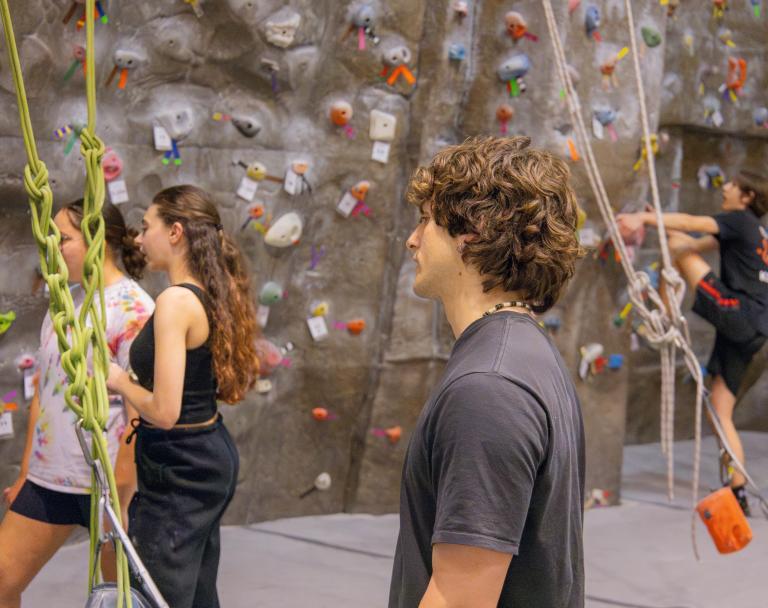
Bright strips of colored tape zigzag across the wall, mapping out paths that challenge climbers to think before they move. For some, climbing is all about strength. For others, it’s about strategy. But for all of those who step up to the wall, it’s a chance to clear your mind, mentally reset, socialize with friends, and challenge yourself.
The indoor rock climbing wall at YCP offers students more than just a typical workout. With the option of around 60 different climbing routes at a time, the wall caters to all skill levels with a welcoming, low-pressure environment. So even if you’ve never climbed before, you’ll probably find a route that works for you.
What climbing the YCP rock wall has to offer
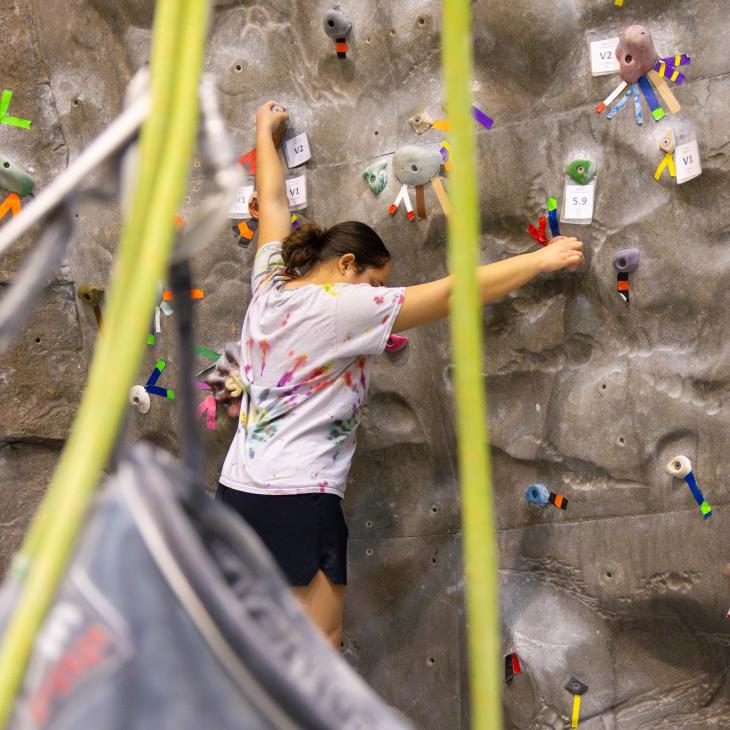
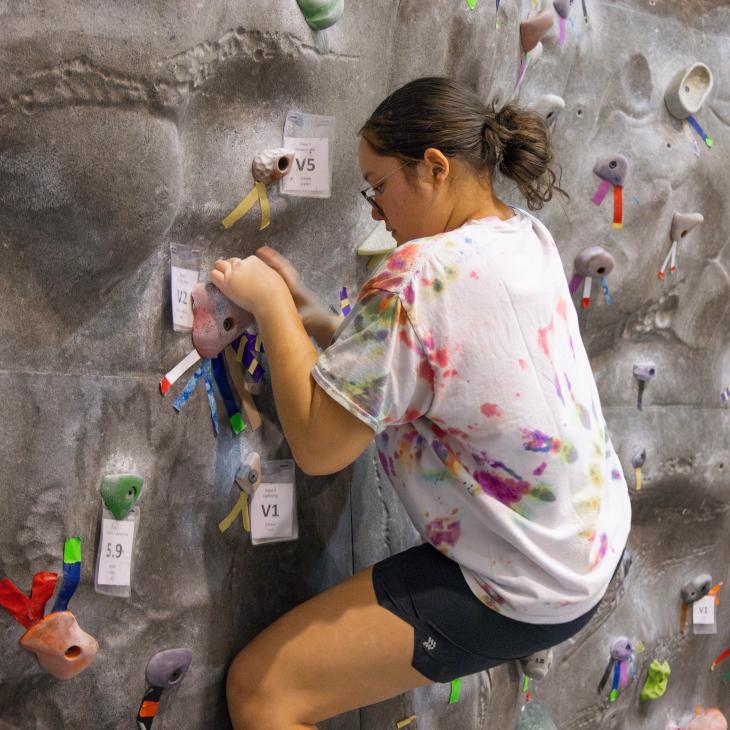
At first glance, the wall can definitely be intimidating. Standing at 32 ft tall and scattered with different colors and shapes, the wall offers a challenge to those who want to push themselves, but has options for anyone who is willing to try.
Each route is guided by color-coded tape—mapping out the path from start to finish. Some climbers “read” the wall before taking on the challenge of the climb by visually taking in the scene and developing their plan to tackle a specific route. The routes are reset twice a semester to keep the wall fresh for returning climbers.
Students can choose between two main styles of climbing:
- Bouldering: Free climbing shorter routes (typically up to 15ft) with no harness or rope.
- Top-Roping: Harnessed climbing with a belayer (person spotting and controlling rope from the ground), allowing them to climb the full height of the wall.
One of the biggest advantages of participating in this club? Everything is provided for you!
Indoor climbing typically requires specialized gear like climbing shoes, harnesses, belay devices, or chalk bags, which can be expensive to purchase or even rent at a climbing gym.
At YCP however, that barrier is removed, “We have all the stuff here,” said sophomore nursing major and member of the club Sam Chantal. “We have all the shoes that you need and all the equipment.”
This accessibility is a huge motivator for students, there’s no need to invest in fancy or expensive gear. It’s not often you have the chance to freely indoor climb with no fees or having your equipment fully provided. This makes it easy for anyone to try climbing for the first time without worrying about the cost.
What keeps students coming back to climbing
As with most college involvement stories, many students found out about the climbing club at the involvement fair, prompting them to come to a meeting and check it out.
“I came to college very open-minded,” said Sam. “I wanted to have a hobby and find something new to do… I tried this out, I really liked it right away, and I just kept going from there.”
What often surprises students is that in their hunt to join a club to just be involved, stay active, or try something new, they end up gaining a much more meaningful experience than they expected—building a strong sense of community among peers and allowing room for personal growth. What starts as just a casual interest, quickly turns into a passion they did not anticipate.
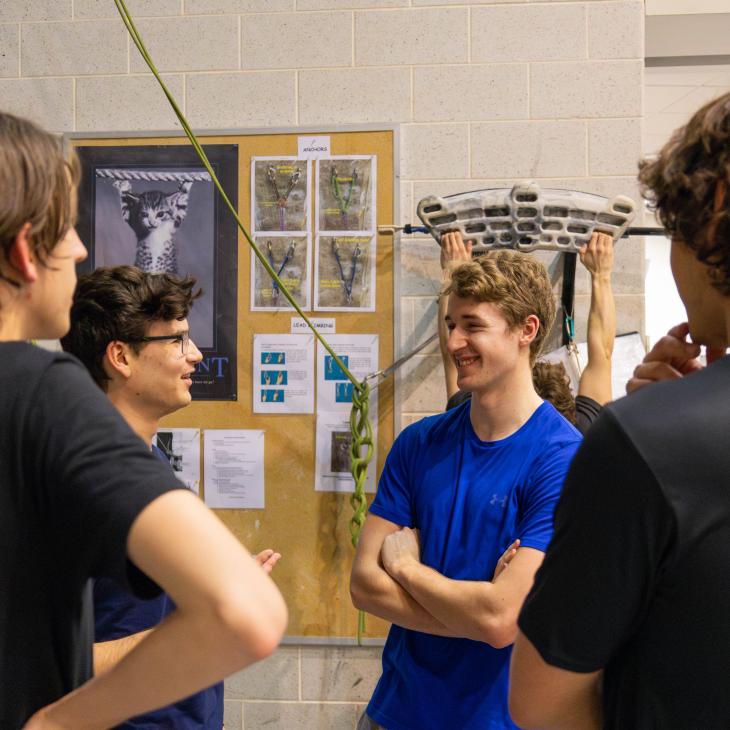
For many students, keeping an active lifestyle is important. While climbing can be physically demanding, many students find themselves coming back for the environment and overall experience as much as the workout itself. President of the club, Cole Pines, describes it as “one big group of friends.” For those who don’t enjoy traditional gyms or structured sports, climbing offers a different outlet combining physical challenge, mental focus, and social connection.
In addition to the social appeal, climbing builds strength and flexibility, while giving you the satisfaction of solving something difficult. As vice president of the club Jane Cox explains, “It’s a really fun way to get your exercise, to move your body, and it really engages your brain in a way that’s different from the gym.”
Inside the mind of a climber
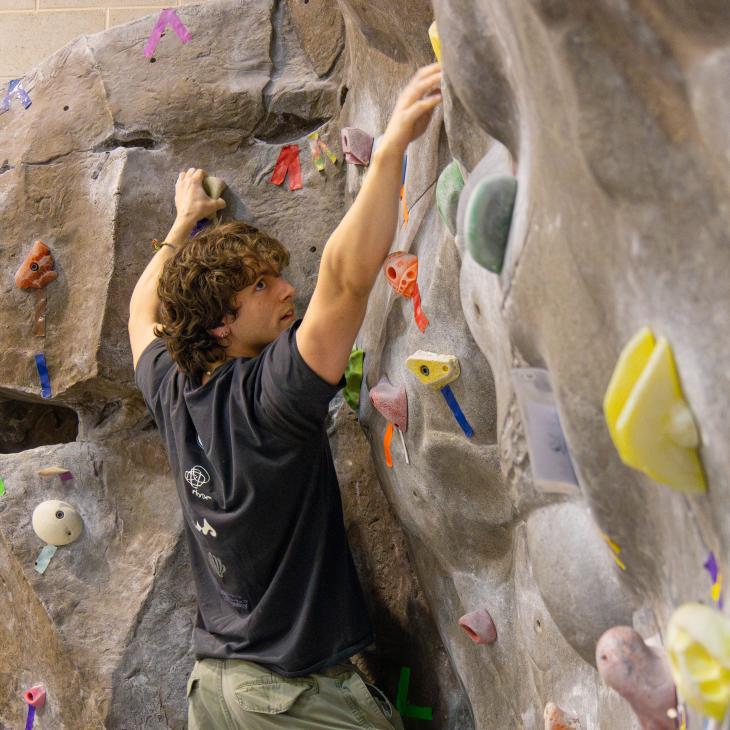
Climbing has an interesting way of involving your mind in the process of being active. Some use it as an opportunity to completely clear their thoughts, like Sam who says, “Normally I do think a lot just throughout the day, but when I climb, I just kind of feel very relaxed, and I feel very calm.”
Others see climbing as a mental challenge, almost like solving a puzzle. Jane explains, “It’s about figuring out what the problem is and then trying to go from there.”
One of the first thing climbers can do before they physically take on the wall is something called “reading the route,” where you take the time to step back, look at all the moves you have, what hand placement to use, where your feet go, and work through the problem you’re facing before engaging in the climb.
Being up on the wall really puts your mind and problem-solving skills to the test, especially when you add the thrill and adrenaline of being so far from the ground. Cole describes the experience as “almost like a mini panic of, ‘oh what’s next?’” He explains that in those moments, climbers have to quickly decide their next move. “Either you figure it out and get through it, or you fall and you’re immediately like, ‘oh what did I do wrong?’”
With climbing, there can be a lot of failing and trying again. An important trait that members of the club stress is open-mindeness. Climbing can definitely be a mentally challenging, and sometimes frustrating, activity but you have to be open to trying or thinking about things in new ways to keep moving forward. Recognizing the support you have from your peers on the ground can also help guide you through each climb.
Climbers also aim to let go of frustration. If you can’t complete a route or miss your chance before a reset, you have to move on, focus on improving, and trust that there will always be new challenges to work toward. This not only helps with personal growth in your journey, but the physical aspect of getting better each week.
Different people use different techniques. There’s no set way to be a climber—what works for you might not work for someone else.
How has the club grown?
Seeing the club’s thriving participation in recent years, you’d never guess they nearly disbanded completely over the pandemic. It’s also tough to imagine that the club used to be almost entirely male students.
“When I first came to the rock wall, there were only like two other girls in the club,” said Jane, “But we’ve gotten it pretty close to a 50/50 split right now. That’s something I’m really proud of because climbing is a great thing for girls to do.”
The inclusivity of the group makes it easy for members to keep things interesting. Whether it’s challenging each other to push beyond traditional routes, or traveling as a group to another local climbing gym for a change of scenery, the shared support and openness keeps the experience fresh and engaging for everyone.
Looking ahead, the club hopes to build on the progress it has made, continuing to grow in the coming years. The environment that the group fosters is welcoming to anyone with even just the slightest interest in climbing, encouraging people to show up and give it a try!
YCP climbing club lore
From the moment you walk into one of their meetings, it’s clear how the indoor climbing club likes to keep things fun—whether it’s through traditions or creative challenges.
Something senior members of the club take pride in is, “passing the torch, ” as Cole stated. This idea comes from the tradition the club has of swearing in new E-board members in a way that playfully mimics a real presidential inauguration. While his group likes to lean into this humor and lightheartedness, they emphasize their focus on preparing the club’s future leader and setting them up for success to keep working towards the goal of growing the club.
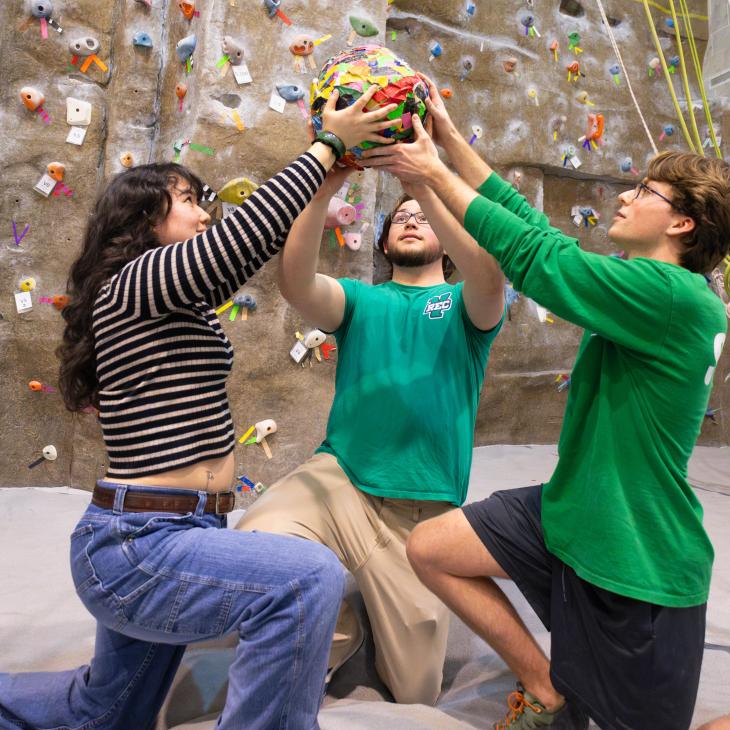
Another thing that’s been growing within the club… is a tape ball named “Trevor.” Trevor has been growing for many years, as members add to it each time the route on the climbing wall is reset. The tape comes off the wall and gets added to Trevor, contributing to its growing size and collection of shared memories. What started as a simple collection of unwanted tape has evolved into a unique way the club stays connected with their past members. Trevor represents the longevity, creativity, and whimsical spirit of the club. With every new layer added, Trevor becomes a reminder of the community that has existed and is built up over time.

What sticks around
In the end, the indoor climbing club offers more than just a place to work out. Between its welcoming environment, flexible structure, and sense of tradition mixed in with a little humor, it creates a space where people keep showing up not only to climb, but to connect with each other. And much like Trevor, the tape ball, the connections that have been made here tend to stick and expand, well beyond your college years.