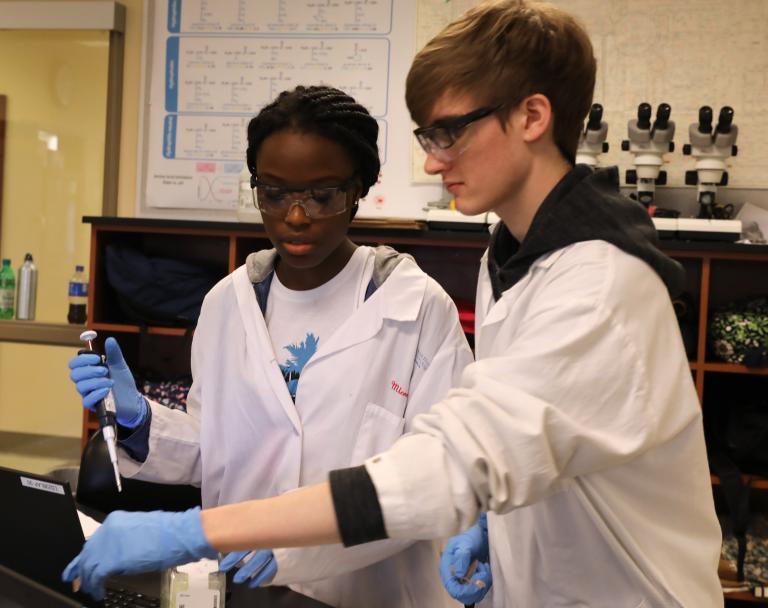
A premed degree provides a strong foundation in scientific knowledge and skills that can open doors to various healthcare careers as well as prepare undergraduate students to apply to medical school or similar advanced professional degree programs. While many premed students set their sights on becoming physicians, a premed degree provides transferable skills and knowledge that apply to diverse healthcare careers beyond professional care providers. Premed students gain analytical abilities, problem-solving skills, and core science competencies that open doors in medicine, research, healthcare business, and more.
What is a Premedical Sciences Degree?
A premedical sciences degree is a bachelor's degree program focused on preparing students for potential healthcare careers and acceptance into medical, dental, veterinary, physician assistant, or physical therapy graduate and professional programs.
Some colleges may offer premed advising tracks or services to help students of any major gain knowledge and experiences for medical school applications. In contrast, a Bachelor of Science (BS) in Premedical Sciences provides comprehensive undergraduate coursework tailored specifically for those interested in pursuing professional clinical training or entering directly into medical careers.
Premedical sciences programs aim to establish a robust scientific foundation and cultivate skills valued in healthcare professions, typically through coursework such as:
- Anatomy and physiology
- Biology
- Calculus
- Chemistry (inorganic and organic)
- Medical philosophy
- Medical terminology and technology
- Physics
- Psychology and behavioral sciences
Read our blog on what to look for in a premed degree program, especially if you intend to apply to graduate or professional degree programs after earning your bachelor’s degree.
Healthcare Careers Accessible With a Bachelor’s Degree in Premed
The scientific curriculum of a premed degree develops critical thinking, attention to detail, patient care methods, and problem-solving skills that are valued across healthcare universally. The well-rounded coursework provides foundational knowledge for diverse career paths attainable with a bachelor’s degree in premedical sciences.
For students interested in entering the healthcare workforce without additional graduate study, a premed degree opens doors to the following careers.
Medical Lab Technologist
Lab techs use sophisticated laboratory equipment to carry out tests that aid other clinicians in diagnosing and treating illness. With a premed background, lab techs understand how to properly collect, handle, and analyze biological specimens and data.
Medical Research Assistant
Research assistants perform administrative tasks to support medical researchers, such as coordinating study participants, gathering data, maintaining records, and ensuring regulatory compliance. Premed coursework provides a valuable context for understanding the process and evaluation of medical studies.
Clinical Trials Associate
Clinical trial associates work for pharmaceutical companies, universities, or research firms to coordinate operational and administrative aspects of clinical trials for drugs, treatments, or medical devices. A premed bachelor’s degree with practical experience in clinical settings can help you explore this career path.
Pharmaceutical Sales Representative
Sales representatives use their specialized medical knowledge to promote pharmaceutical products to physicians, hospitals, pharmacists, and other healthcare professionals. In this career path, a premed background aids in understanding medical terminology, health conditions, and treatment options.
Community Health Educator
Health educators develop programs and resources to teach communities about health topics and wellness. Premed coursework provides a foundational understanding of medical concepts, anatomy, prevention, and treatment, as well as the sociocultural underpinnings of public health.
Patient Navigator
Often employed in health insurance organizations, hospitals, clinics, and private medical offices, patient navigators help patients understand their health conditions and guide them through their treatment plans, coordinating between providers to ensure quality care. Skills in psychology, science, and policy learned in a premed program are valuable foundations for this career path.
Careers With a Premed Degree Requiring Graduate or Professional Study
With a premed degree, students can lay the groundwork for pursuing clinical practice or advanced healthcare roles through graduate study. A premed bachelor's degree is the first step for many students pursuing professional programs like osteopathic medicine, physical therapy, veterinary medicine, optometry, or surgical medicine.
Physician/Doctor
Doctors diagnose conditions, provide treatment plans, and prescribe medications. A premed bachelor’s degree program helps students meet many med school prerequisites, which must be followed by four years of medical school and 3+ years of residency training culminating in either a medical doctor (MD) or doctor of osteopathy (DO) designation.
Physician Assistant
Physician Assistants, or PAs, practice medicine under physician supervision, conducting exams, ordering tests, and developing treatment plans. A premed degree generally meets the academic prerequisites to apply for a 2-3 year PA program.
Medical Researcher
Medical researchers are scientists and scholars trained at the PhD level who conduct studies investigating human diseases, discover new drugs/therapies, and further medical knowledge. A premed degree provides a science background for admission into PhD research programs.
Public Health Official
Public health officials analyze health trends, develop educational or advocacy programs, and implement policies to improve community wellness. A Master of Public Health degree (MPH) builds on premed science courses and is the typical education requirement for this career path.
Healthcare Administrator
Administrators in healthcare settings manage operations, programs, and facilities for hospitals, private practices, and health systems. Premed coursework is useful preparation for a Master in Health Administration (MHA) degree program, which opens careers in administrative settings and organizations dedicated to improving health systems.
Premedical Sciences Salary Outcomes
A bachelor’s degree focused on premedical topics and skills is the foundation for expansive careers with salaries that vary greatly based on professional experience, further education and certifications, and specialized training.
Careers that require further education and training such as medical practitioners typically report higher salaries than occupations that require undergraduate degrees alone, but those roles can also bring rewarding salaries due to specialization and experience.
To find the most recent salary information for occupations within the health and medicine sector, explore databases such as the Bureau of Labor Statistics, Salary.com, and Indeed.com. Remember to consider the level of education typically required for roles you are interested in.
Unique Advantages of a Premed Degree
Beyond opening doors to diverse healthcare careers, a premed degree offers these advantages:
- Flexibility to pivot into different medical roles
- Strong preparation for healthcare graduate programs
- Core scientific foundation for medical practice
- Preparation for MCAT exam and medical school applications
Next Steps After a Premed Program
A premed degree can lead to many paths – not just one rigid track into medical school. By pursuing a premed program, students gain valued skills and knowledge applicable across healthcare, scientific research, and medical business enterprises. With an understanding of healthcare fundamentals, premed graduates are equipped to follow their passion to a fulfilling career improving lives.
Learn More About York College's Premedical Sciences Program
York College offers a comprehensive Bachelor of Science in Premedical Sciences degree program with academic and experiential preparation tailored to each student's career aspirations in healthcare and medicine.
With opportunities for professional clinical exposure in top hospitals and clinics, undergraduate research opportunities, alumni connections, and various extracurricular and campus activities, graduates of York’s premed program are well-prepared to enter their desired careers or pursue further education and training.