Secondary Education Biology major Rylan Wolfe ‘27 was invited by the Robert Noyce Teacher Scholarship Program to Michigan for the summer. While there, he not only conducted research on human circadian rhythms but also learned valuable skills that could be applied to his studies and hands-on work as a teaching assistant and future teacher.
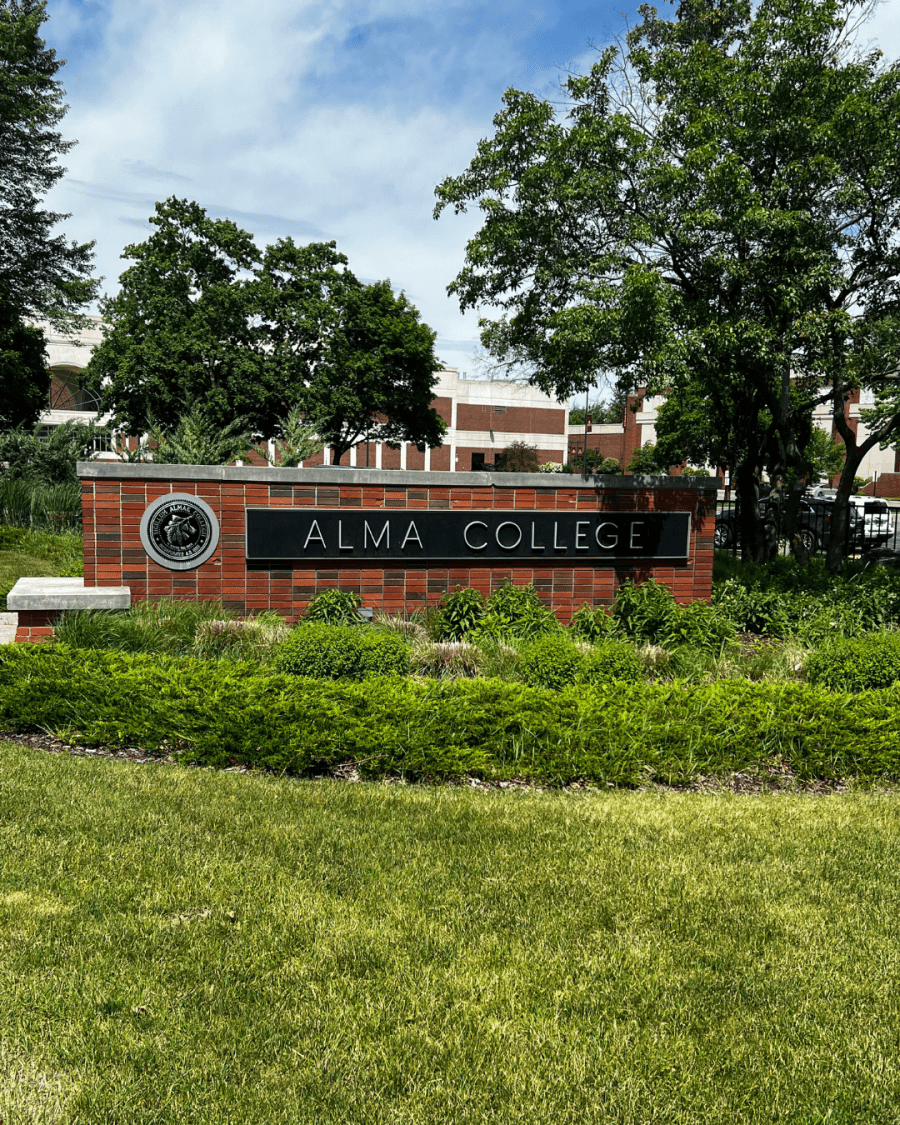
Through the National Science Foundation (NSF), the Robert Noyce Teacher Scholarship Program aims to increase the number of incoming K-12 teachers by supporting higher education institutions and offering opportunities for STEM majors and professionals. Their Research Experiences in STEM Settings (RESS) program advances this mission by inviting those interested in teaching secondary education to Alma College in Michigan. Over the 10 weeks spent there, individuals participate in hands-on research with experienced faculty while learning to translate what they learn into relevant knowledge to navigate the teaching field.
This year, York College of Pennsylvania student Rylan Wolfe ‘27 was selected to join the 2026 RESS program. As a result of his time in Michigan, Rylan not only gained invaluable research experience assisting with a study on human circadian rhythms, but also new insights into how to build on the foundation York College’s teaching program provided to be an effective high school science teacher.
A Time to be a Teacher
Rylan grew up in York, PA, where he attended Central York High School. While there, he reflected early on what he envisioned pursuing as a career. He soon found that he loved the idea of teaching, specifically in either a middle or high school setting.
“I knew for a little while that I wanted to be a teacher, and…it was just a matter of figuring out which subject that I liked,” Rylan said. “I wanted to do math initially, but then, as I got to the high-level math classes in high school, I realized that maybe I should decide on something else. I took Biology in my junior year of high school, and I really, really enjoyed that. So I ended up deciding to be a Secondary Education Biology [major].”
As a result, Rylan chose to stay local after his high school graduation and attend York College as a Secondary Education Biology major. He was impressed with the college’s supportive faculty and the many hands-on teaching opportunities they organized for the students in the program.
So far, his curriculum has required him to complete two field experiences that have given him exposure to working in a classroom environment. The first occurred during the 2024 Fall Semester, when he helped teach ninth-grade biology and tenth-grade chemistry at York Academy Regional Charter School. The second took place at Emory H. Markle Middle School, where he helped teach seventh-grade biology.
“I feel very good about the experiences and what I learned doing that,” Rylan said.
According to Rylan, professors in the Education Department often advise their students to take on additional challenges and experiences alongside their coursework, which can help them grow into teaching roles they feel confident filling. So, completing programs like RESS is recommended to expand their knowledge and learn ways to connect with their future classrooms.
This is what led professors such as Dr. Nicole Hesson, Associate Professor of Education and Rylan’s academic advisor, to reach out to Rylan and other Secondary Science Biology majors about the Robert Noyce Scholarship opportunity.
“I can't say enough good things about Rylan! I've taught Rylan in three different courses, and he will be in another one with me this fall,” Dr. Hesson said. “Since his first year, Rylan has been a very strong student. He's maintained a near-perfect GPA, which is quite impressive. He has a strong work ethic, and he always puts out his best work.”
Seeking Experience Outside the Classroom
The Robert Noyce Teacher Scholarship Program RESS at Alma College focuses on students working toward obtaining degrees and certification to become high school science teachers, and allows them to grow in their research and teaching skills. It also provides a space for participants to connect with one another and deepen their knowledge of the topics.
“It’s a program that is open solely to secondary science education majors,” Rylan said. “And I [was] really excited for that because I don’t really know any other secondary science majors...”
He described the experience as a two-pronged program with lab/research and education components. The lab portion gave students time to conduct research with experienced faculty, engaging in the scientific process by formulating and testing a hypothesis. The education portion centered on learning about and implementing the Ambitious Science Teaching (AST) framework, a teaching method for science that the next generation’s standards are based on and that science teachers use today. They essentially dictate which methods and new materials are recommended for teaching science.
As part of the program, participants were asked to join a research group and assist a professor with their topic. These projects included exploring the effects of road salt on aquatic ecosystems, understanding how genetic hybrids known as Beefalo inherit chromosomes and phenotypes from bison and cattle, and investigating the synthesis and assembly of DNA-functionalized gold nanoparticles.
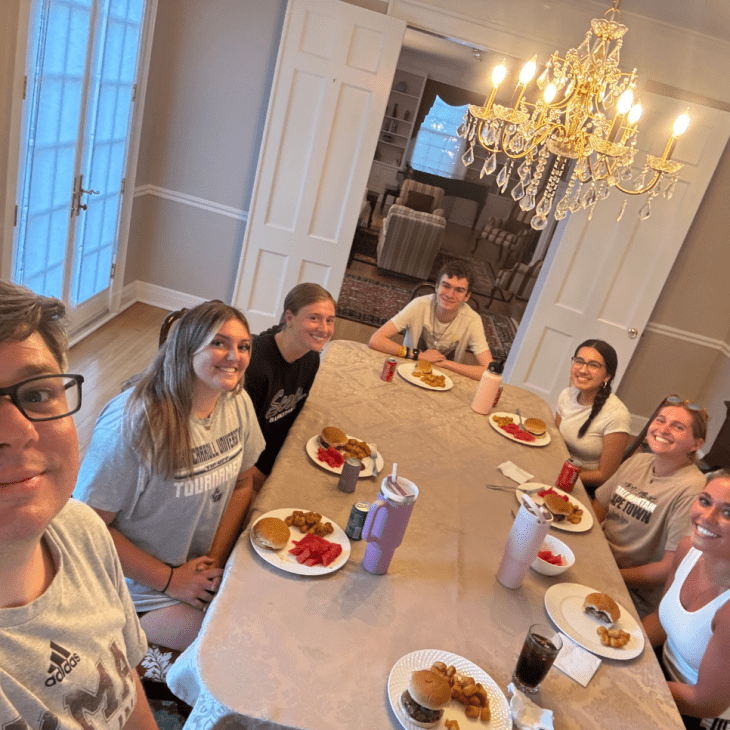
Rylan chose to work with a group studying the human circadian rhythm and whether exercise performance can be affected by it throughout the day. He was joined by three other students from the Robert Noyce Scholarship Program and one student from Alma College’s Cooperative Research Experience (CORE) program, where Alma College students can partake in summer research. Together, they assisted an Alma College faculty member with research and had the chance to get to know each other, making the experience memorable.
“In whatever it is that I’m doing, whether it’s school or it’s work or whatever it is, I find the thing that I enjoy the most is always just the relationships that I get to make and the people that I meet,” he said.
The Exercise Impact
Rylan shared that part of his reasoning for choosing the circadian rhythm research was its unique requirement for human trials to gather the information.
“You become certified to conduct an experiment with human trials, which I thought was really interesting, and [you get] to see what that experience is like, because there are a lot of regulations that go around human trials, because you want to protect your human participants,” Rylan said. “So I was really curious to see what that process looks like and what all goes into that.”
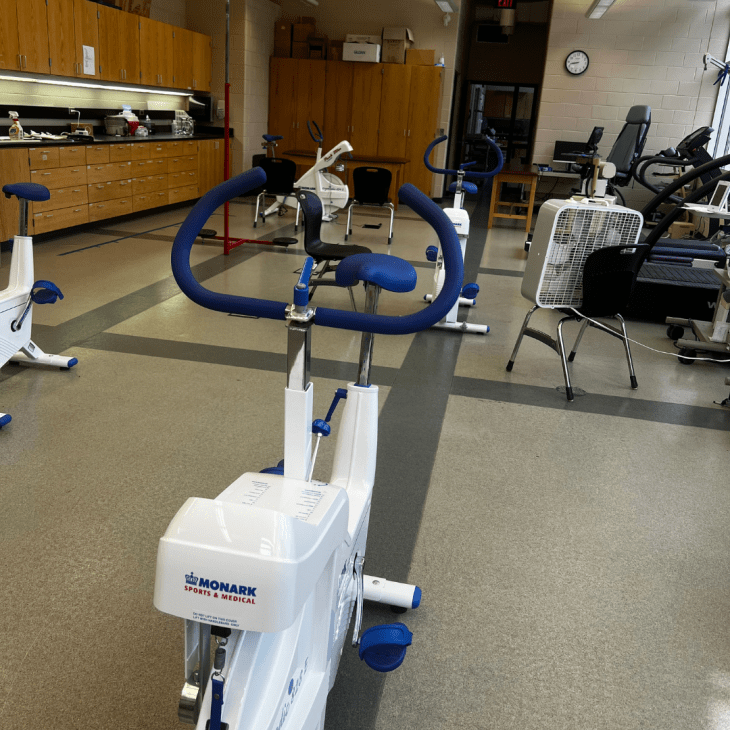
The research started with 13 participants, who spent the first week being tested and measured in their exercise performance. They then underwent six weeks of training and workouts at different times of day, all exactly the same for each individual. Over the last week, the participants were tested again to assess overall improvements.
Two types of exercise were studied: aerobic (endurance training) and anaerobic (high-intensity, short-duration exercise).
The goal was to study whether circadian rhythms affect exercise performance throughout the day. In other words, the group wanted to know whether there is a specific time of day that is optimal for training (such as morning versus evening). A second sister study group was also working with the group to examine heart rate variability, which is the difference in time between heartbeats.
As of right now, a research conclusion hasn’t been announced yet. Rylan’s group received a large dataset, which is currently being examined and analyzed. Although he’s not sure how involved he’ll be in the process, Rylan knows the group discussed potentially writing a scientific report that members would co-author and eventually publish. The process will probably take several months to complete.
Another Perspective on Learning
Spending his summer in Michigan allowed Rylan to start preparing for student teaching. Conducting research and attending teaching sessions led by experienced college professors were useful interactions, especially in shaping his own instructional style for his future students.
The experience was especially impactful for him because it went beyond his college classes and assisting in a middle or high school. He discovered and developed strategies that can be used in the future, as well as engaged in experiences he can learn from.
“Putting yourself out there, going to another state and doing something that you’re a little unfamiliar with [or] maybe you don’t necessarily know that much about, you’re going to learn a lot just from that unique experience,” he said. “And on top of that, for students who are in my boat, who are secondary science majors, it is for those students specifically. It is a program designed for you to learn and for you to get better at what you want to do. And so I think, any sort of internship, scholarship-type program like that, where you are in the field that you want to be in, is very valuable.”
Overall, Rylan shared that the program left a positive impact on him and his preparations for the upcoming school year. Not only did he speak with program participants, but he also connected with professors who offered their contact information for future communication.
He learned techniques and practices that he can apply in his own classroom setting for future teaching as well, including the AST style of teaching and phenomenon-based learning. Now, Rylan is even more prepared for his required student teaching.
“I really like the idea of starting with this [topic] that everybody knows about and has some background knowledge on, and using that as a method to talk about the content. It’s a great way to interact with students who maybe don’t know the content as well, but do have knowledge to be able to interact with and participate in class,” he said. “Science content can definitely be a barrier for a lot of students because it can be very intense. So focusing through the lens of an everyday phenomenon that people know and maybe just can’t fully explain gives every student an opportunity to be able to participate and engage with the content, and I just really like that idea.”
Rylan also credits York College for preparing him for the work and lessons he picked up on during his time in Michigan. Through his classes, he learned notebook prep, which was incredibly helpful when he had to complete lab work. He also had extensive practice with organizational work and writing scientific papers, which were extremely useful for the research and lessons he participated in. It was especially helpful when reading long scientific articles and literature, and when creating unit plans for students.
For Rylan, the experience meant a lot and gave him brand-new perspectives on how to be an effective teacher for the incoming generation of secondary education students. Not just in knowledge, but in spirit as well.
“[...] I knew his application would be really strong, and I was fairly confident he would be accepted to participate in the program,” Dr. Hesson said. “On top of his academic achievements, Rylan is an overall good person! He is kind to everyone and incredibly good-natured. He is patient and flexible - all qualities that will make him a great teacher. We are all so proud of him!”
Rylan shares that these out-of-classroom experiences that go beyond what is required by their curriculum and program can leave a lasting impression. So if a program looks interesting, even if it’s a bit out of an individual’s comfort zone, give it a try. Experiencing new things is the best way to grow and learn. And now, thanks to this experience, Rylan is more than prepared for his senior year at York College.
“I’ve thoroughly enjoyed my three years so far here, and I’m looking forward to my last year as well, and student teaching in the spring,” Rylan said.