

Resilience in a Layered System: Navigating Funding for Local Libraries in Pennsylvania

87% of libraries within the Commonwealth are managed through a nonprofit organizational status, with the majority of their funding deriving from public dollars. This structure forces libraries to rely on a variety of methods to overcome an uncertain landscape. Those in York County face a distinctive challenge: allocations from city, county, and property taxes account for less than one-third of the library’s operating budget. As York County Libraries (YCL) notes, “...This funding is not guaranteed and is highly vulnerable to being reduced or cut every year.” Despite relying on fragile funding streams, public libraries make the most out of their limited resources, remaining essential pillars of their communities.
A Library's Role in the Community
Before exploring library funding, it is first important to understand the services they provide. Over the past century, libraries have undergone a remarkable transformation. Historically, they were seen as quiet sanctuaries, known for housing books and preserving knowledge. Today, they have evolved into vibrant, multifaceted social centers that offer more than just reading materials. With the rapid rise of technology, public libraries serve as gateways to digital literacy, providing free access to computers, printing services, and Wi-Fi to those without reliable internet at home. In rural areas, often considered book deserts, libraries can serve as the only accessible source of learning materials and technology.
In addition to embracing technology, libraries have expanded their mission to progress literacy in all its forms, from digital and financial literacy, to health, civic, and cultural education. Children can attend early literacy programs that build foundational reading skills, while adults can access resources like career development or health awareness. According to the PIAAC U.S. Skills Map, 18% of York County residents are classified as having low literacy skills. This statistic further emphasizes the importance of a library’s role in providing opportunities.
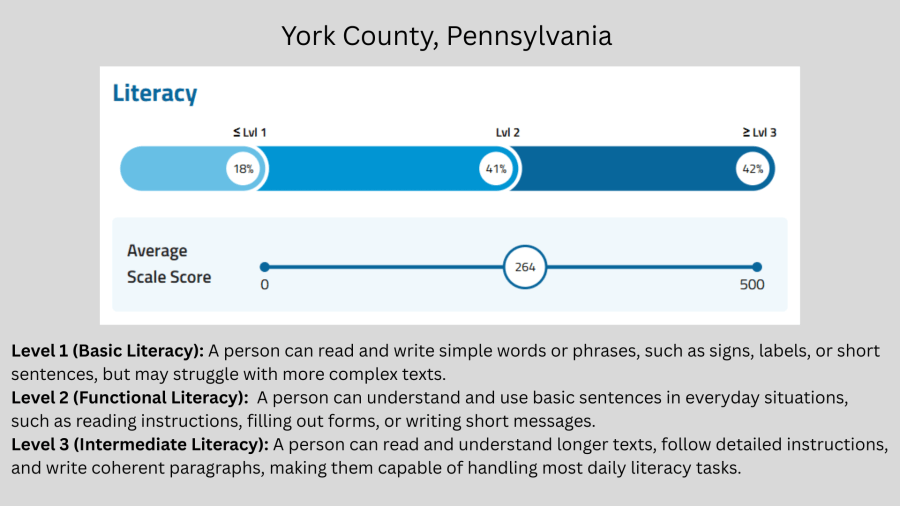
Figure 1. York County, Pennsylvania Literacy Levels
Beyond education, libraries act as equitable spaces. For underserved populations, they offer a lifeline to resources that might otherwise be limited elsewhere. For instance, many libraries will offer their buildings as venues for workshops or informational sessions, hosted by external organizations. A library may coordinate with a HUD-certified housing counselor for a series of discussions on first-time homeownership. This is an all-encompassing benefit; organizations benefit from the free venue to host the workshop, participants obtain the information shared, and libraries gain the exposure events like these provide.
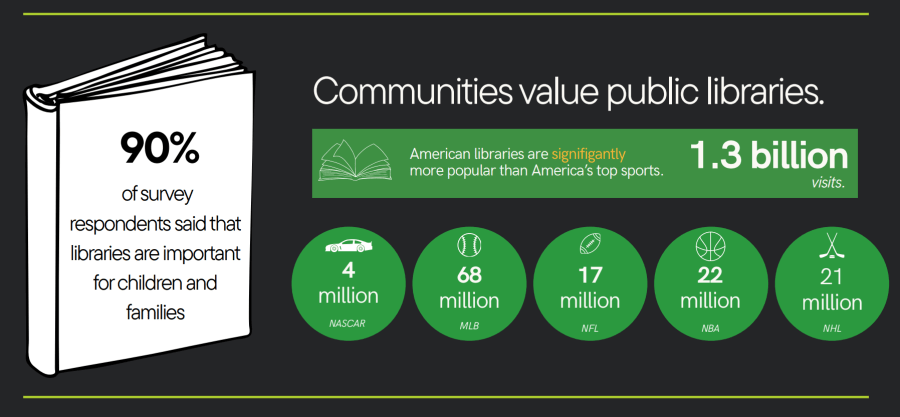
Figure 2. Community Value of Public Libraries
A Library’s Approach in an Uncertain Landscape
Libraries fit the traditional nonprofit structure where resilience and foresight are key to long-term success. Rather than waiting for transformational events, such as funding cuts, demographic shifts, a global pandemic, or changing attitudes of a society, libraries instead envision a range of plausible futures and develop strong strategies. This systematic exploration of uncertainty – known as scenario planning – allows institutions not only to respond to change but to shape their futures with confidence and creativity.
The COVID-19 crisis is a relevant example. Although a global pandemic was not something that most organizations predicted, libraries pivoted and relied upon methods they had already cultivated: technologies' role in service delivery. Expansions to e-book collections and virtual programs became the primary accommodation for social-distancing protocols.
During a time when learning loss was exacerbated, libraries continued to provide services under restricted conditions. While library buildings were closed during the pandemic, YCL offered themed book packages and age-inclusive grab-and-go craft kits. Aging and increasingly diverse populations were seeking services, which led libraries to tailor their outreach and collections to better serve these groups during this unique time.
In 2024, a Service Optimization Study was conducted for YCL with support from the York County Community Foundation (YCCF). The Service Optimization Study assessed ways in which YCL library services can withstand funding uncertainty and societal changes going forward. It concluded the YCL system needed to act by deepening collaboration with local entities such as schools, municipalities, other nonprofits, and businesses; transitioning certain locations to different methods of operations, like owning facilities instead of renting; and piloting new initiatives, such as mobile library services or pop-up programming. However, an uncertain budgetary landscape resulted in trade-offs. The study’s usage data showed YCL which locations should transition to the reduction of hours, shift from member to branch library locations, downsize staff, and merge collections and resources.
Federal Level Funding Context
Having explored library services and their maneuverability through assorted challenges, the focus shifts to how libraries obtain financial support. Though federal support is not the primary funding stream for public libraries, it has been a consistent source of support for decades. Funding decisions are often shaped by the political party controlling appropriations. Despite the fact that less than 25% of voters support funding cuts for libraries, a March 2025 executive order stated intentions to eliminate the Institute of Museum and Library Services (IMLS), whose primary goal is to support libraries through grants, research, and policy guidance. However, full elimination of the IMLS (either through repeal or defunding) would require Congressional action.
For fiscal year 2026, the administration used executive authority to withhold congressionally appropriated funds, canceling approximately 1,200 competitive IMLS grants which encompassed more than 90 percent of IMLS’s grants. Due to advocacy efforts, the federal grants were recovered. The grant reinstatements come as a direct result of a federal court decision. This ruling determined an illegal violation of the Impoundment Control Act, a federal law that prohibits the executive branch from unilaterally canceling or permanently withholding congressionally appropriated funding. Debates over library appropriations are expected to continue.
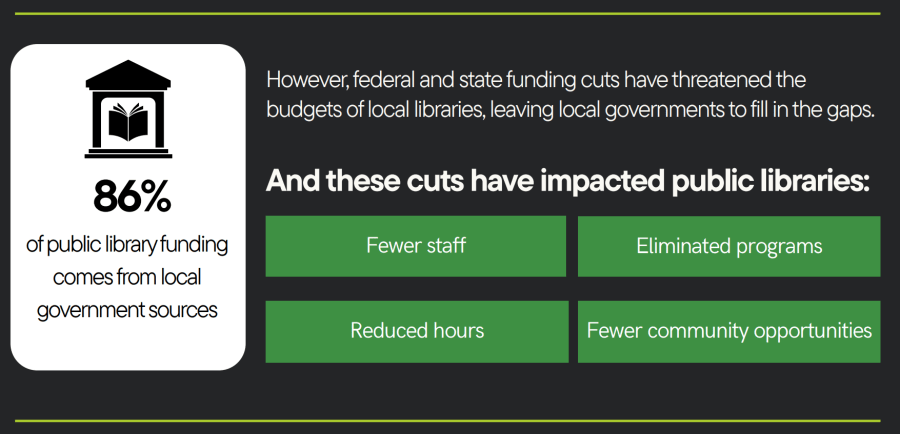
Figure 3. Impact of Funding Cuts on Public Libraries
State Level Funding Context
Five years of consecutive state budget delays adversely affected nonprofits across Pennsylvania. Without a finalized budget, organizations face cash-flow problems, making it hard to pay staff or cover operating costs. Budget delays disrupt grant cycles and stall reimbursements, while partnerships with state agencies become unreliable. This uncertainty forces nonprofits to make even tougher choices, often delaying or reducing services that individuals depend on.
According to the executive director of the Pennsylvania Library Association, “State support for libraries increased by $5 million to $75.47 million last year, but due to previous cuts, the gain only brought funding back up to 2001 levels.” Indeed, the 2026-2027 state budget showcased no increase from the previous year. During a budget discussion hosted by the Pennsylvania Policy Center (PPC), the PPC emphasized this virtually amounts to a cut because the budget has not been adjusted for inflation.
Library operating costs are significant, with expenses ranging from staff salaries and collection maintenance, to technology upgrades and facility upkeep. Salaries are one of the largest recurring costs: librarians in Pennsylvania typically earn between $34,000 and $69,000 annually, depending on experience and location. Beyond personnel costs, maintaining a collection of books, materials, and digital resources are expensive, with additional replacements, repairs, and more.
A study conducted by the U.S Government Accountability Office notes “...an estimated 70% (about 11,200) of libraries have a backlog of deferred maintenance and repairs.” Many library locations are housed in older buildings, which often require additional funds for repairs, renovations, and upgrades to meet modern accessibility and safety standards. The State reviewed county requests ranging from minor or major facility projects. Pulling from Keystone Grants for these facility projects, one of YCL’s locations, Kaltreider-Benfer Library, received $99,782 to replace the roof and HVAC system.
Local Level Funding Context
Based on reports compiled by the American Library Association, “86% of public library funding comes from local government sources.” In 2018, York County implemented a dedicated library tax, adding $0.09 per $1,000 of a property’s assessed value to a citizen’s annual tax bill. That money is used exclusively to support York County’s public libraries each month.
In York County, however, donations and charitable giving play an even larger role. Institutions like the York County History Center (YCHC) preserve regional heritage through archives, fundraising through annual used book sales, and initiatives such as “Share Your History,” which display how nonprofit libraries alike utilize community-driven fundraising.
The public’s desire to donate to local libraries remains high– 61% of individuals have either contributed or are willing to contribute to fundraising efforts. One local and distinctive example of self-generated funding is YCL’s initiative, Literacy for Change. This initiative raises money to fund literacy programs across the system, doubling as a public showcase of why those programs matter. Another notable campaign in which YCL participates is Give Local York (GLY). This community fundraising campaign encourages patrons to donate to local nonprofits. For smaller branches like the Arthur Hufnagel Public Library in Glen Rock, a Southern York County trail town location, these initiatives and events generate a funding boost, notably instrumental in providing financial support for badly needed renovations following building damages.
With budgets increasingly stretched thin and donations unable to keep up, libraries turn to grants not just as a supplementary resource, but as a necessary means to sustain services. For instance, a United Way Transportation Grant was used to purchase vans for YCL. Although the inclusion of vans has proven to be beneficial in the distribution of services, ongoing expenses like fuel, insurance, and maintenance, add another financial obligation. The grant landscape is highly competitive, with many organizations vying for limited funds, and the application process itself demands significant time and effort. Without grant support, the ability to maintain location hours, programs, collections, technology, and staffing, would be severely compromised.
The Continuity of Public Libraries
“Whatever the cost of our libraries, the price is cheap compared to that of an ignorant nation.” -Walter Cronkite
As political and economic uncertainties loom, libraries face an escalating crisis, one that demands constant adaptation, forcing libraries to stretch resources and make painful choices to keep their doors open. But what would happen if those doors were shuttered? The resources libraries provide could end up behind paywalls or fees, scattered across private institutions, or simply unavailable to those who need them most.
The story of libraries in York County and beyond is one of adaptability in the face of uncertainty, but as funding streams fluctuate and societal needs evolve, one truth remains undeniable: libraries are not a luxury, they are indispensable pillars of their communities. Protecting their continuance is essential to keeping opportunity within reach.

Anna Howard is York College of Pennsylvania’s Glatfelter Institute for Public Policy Scholar-in-Residence. Her research has primarily focused on social systems and nonprofit operations. Anna can be connected with on LinkedIn.
References
Adams, M. J., Finch, M., & Gamble, B. (2023). More than a Game: Scenario Planning, Imagination, and the Public Library’s Future. Public Library Quarterly, 42(6), 665–687. https://www.tandfonline.com/doi/full/10.1080/01616846.2022.2154068
American Consortium for Equity in Education. (2023, November 9). The nationwide effort to #EndBookDeserts. https://ace-ed.org/the-nationwide-effort-to-endbookdeserts/
American Library Association. (2025, December 3). ALA welcomes reinstatement of all federal IMLS grants to libraries. https://www.ala.org/news/2025/12/ala-welcomes-reinstatement-all-federal-imls-grants-libraries
Dorgelo, C. (2025, July 7). The Trump Administration Is Threatening Libraries, Museums, and Other Nonprofits That Support the Arts, Humanities, and Learning. Center on Budget and Policy Priorities. https://www.cbpp.org/research/federal-budget/the-trump-administration-is-threatening-libraries-museums-and-other
Institute of Museum and Library Services—Applicability of the Impoundment Control Act to Reduction of Agency Functions. (2025). In U.S. Government Accountability Office. https://www.gao.gov/products/b-337375
Library of Accessible Media for Pennsylvanians. (n.d.). LAMP. https://mylamp.org/
Libraries, P. C. F. B. (n.d.). Pennsylvania Citizens for Better Libraries. Pennsylvania Citizens for Better Libraries. https://pcblpa.org/
Many Public Libraries Are in Need of Significant Repairs, But Lack the Funding. (2026, April 21). WatchBlog: Following the Federal Dollar. https://www.gao.gov/blog/many-public-libraries-need-significant-repairs-but-lack-funding
McGovern, S. S. (n.d.). How PA libraries are getting by as funding dries up. Spotlight PA. https://www.spotlightpa.org/news/2026/07/public-library-funding-passports-services-budget-reading-third-spaces-pennsylvania-local/
Office of Commonwealth Libraries, Pennsylvania Department of Education, & Governor’s Advisory Council on Library Development. (2025). The future role of public libraries in
Public Libraries Survey (PLS). (n.d.). Institute of Museum and Library Services.
https://www.imls.gov/research-evaluation/surveys/public-libraries-survey-pls
Shapiro Administration awards more than $11 million in Keystone grants to 27 public libraries to improve library facilities. (2026, April 3). Department of Education | Commonwealth of Pennsylvania. https://www.pa.gov/agencies/education/newsroom/shapiro-administration-awards-more-than-11-million-in-keystone-grants-to-27-public-libraries-to-improve-library-facilities
Shapiro administration boosts funding for Pennsylvania’s public libraries, promoting literacy, education, and lifelong learning for all Pennsylvanians. (2025, December 11). Department of Education | Commonwealth of Pennsylvania. https://www.pa.gov/agencies/education/newsroom/shapiro-administration-boosts-
Sweeney, P. (2025, September 4). The funding crisis facing America’s public libraries. Candid. https://candid.org/blogs/todays-funding-crisis-facing-us-public-libraries/
USAspending.gov. (n.d.). https://www.usaspending.gov/agency/institute-of-museum-and-library-services?fy=2026
York County Libraries. (2026, January 27). Arthur Hufnagel Public Library of Glen Rock - York County Libraries.
Van Melik, R., Landau-Donnelly, F., Engström, L., Färber, A., Hamm, M., Kofi, J., & Rivano Eckerdal, J. (2025). Infrastructuring the policymaking, funding and positioning of libraries: unpacking tensions in public library policies in three European cities. International Journal of Cultural Policy, 1–19. https://doi.org/10.1080/10286632.2025.2511176
Appendix
The graphic presents literacy data for York County, Pennsylvania. A horizontal bar divides literacy proficiency into three levels. 18% of individuals are shown at or below Level 1, 41% are at Level 2, and 42% are at or above Level 3. A second scale shows an average literacy score of 264 on a scale from 0 to 500.
The graphic defines the literacy levels as follows: Level 1, Basic Literacy, refers to the ability to read and write simple words, phrases, signs, labels, or short sentences, while more complex text may be difficult. Level 2, Functional Literacy, refers to the ability to understand and use basic sentences in everyday situations, including reading instructions, completing forms, and writing short messages. Level 3, Intermediate Literacy, refers to the ability to understand longer texts, follow detailed instructions, and write coherent paragraphs, allowing an individual to handle most daily literacy tasks.
https://nces.ed.gov/surveys/piaac/skillsmap/
*Image displays literacy rates in York County, PA with 3 levels of literacy
The graphic emphasizes the value and popularity of public libraries within communities. On the left, a large book illustration contains the statistic that 90% of survey respondents said libraries are important for children and families.
On the right, the graphic states that communities value public libraries and that American libraries are significantly more popular than several major U.S. sports. It reports 1.3 billion library visits and compares that total with attendance figures of 4 million for NASCAR, 68 million for MLB, 17 million for NFL, 22 million for NBA, and 21 million for NHL. The comparison is presented to show the scale of public library use relative to major sports attendance.
https://action.everylibrary.org/but_nobody_uses_libraries_anymore
https://journals.library.wustl.edu/pollib/article/8824/galley/25623/view/
*Image displays statistics of respondent’s value toward libraries
The graphic explains how funding changes can affect public libraries. On the left, a library icon appears above a large 86%, with text stating that 86% of public library funding comes from local government sources.
On the right, the graphic states that federal and state funding cuts have threatened the budgets of local libraries, leaving local governments to fill the gaps. It then identifies four ways these cuts have affected public libraries: fewer staff, eliminated programs, reduced hours, and fewer community opportunities.
https://www.ala.org/sites/default/files/advocacy/content/2018_From_Awareness_to_Funding_Report.pdf
*Image displays funding sources and how libraries are impacted because of funding allocations