

Education at the Edges: Why the Most Transformative Learning Happens Outside the Major
There is a quiet flaw embedded into the traditional landscape of higher education, one rarely questioned because it feels so fundamental.
The conventional method asks students to choose a major, commit to it early, and spend four years becoming increasingly proficient within its boundaries. The system at large rewards depth, precision, and specialization. And then, upon graduation, students are often sent into a workforce that demands the exact opposite: adaptability, collaboration, and the ability to think far beyond the confines of a single discipline.
Too many institutions continue to prepare students for a world that no longer exists.
The reality is this: no profession operates in isolation. Healthcare intersects with business. Finance relies on communication. Science depends on public engagement. Yet many educational structures continue to reinforce silos, producing graduates who are technically capable but often unprepared to navigate complexity.
At York College of Pennsylvania, the Graham Fellows Program offers a deliberate disruption to this model. Through its Interdisciplinary Assistantship (IA), students are not only encouraged but also expected to step beyond their academic disciplines and engage in professional environments that challenge their assumptions about work, identity, and expertise.
This is not an enhancement to their education. It is a necessary expansion of it.
What Happens When You Move to the Edges
In the Interdisciplinary Assistantship, students are intentionally placed outside their academic comfort zones. Not adjacent to their field. Not loosely connected. Entirely outside.
On paper, it doesn’t make sense. In practice, it changes everything.
Consider three students from this past cohort:
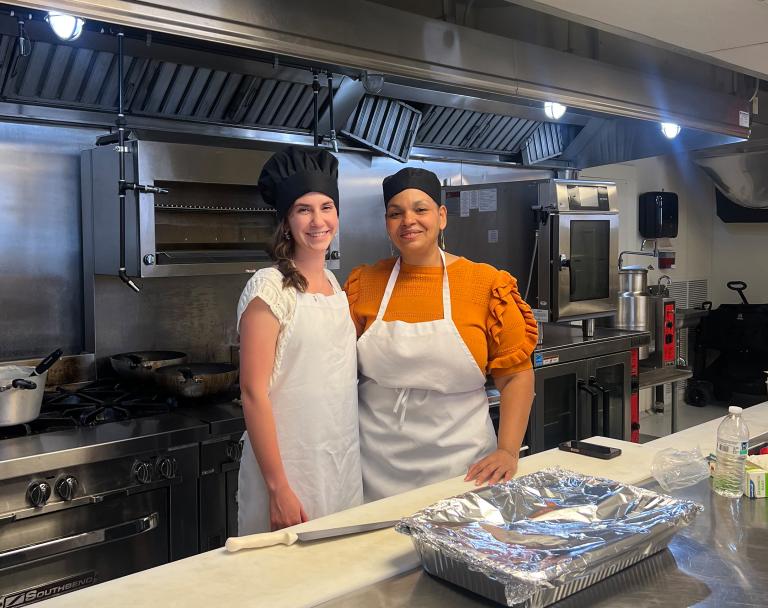
- Alexis Seymour ‘28 (Nursing) paired with Liz Morales, chef and founder of Cooking Up Connections and Morales Kitchen.
- Trae Schanberger ‘28 (Finance) paired with Jeena Presley, communication specialist at Shadowfax Corporation.
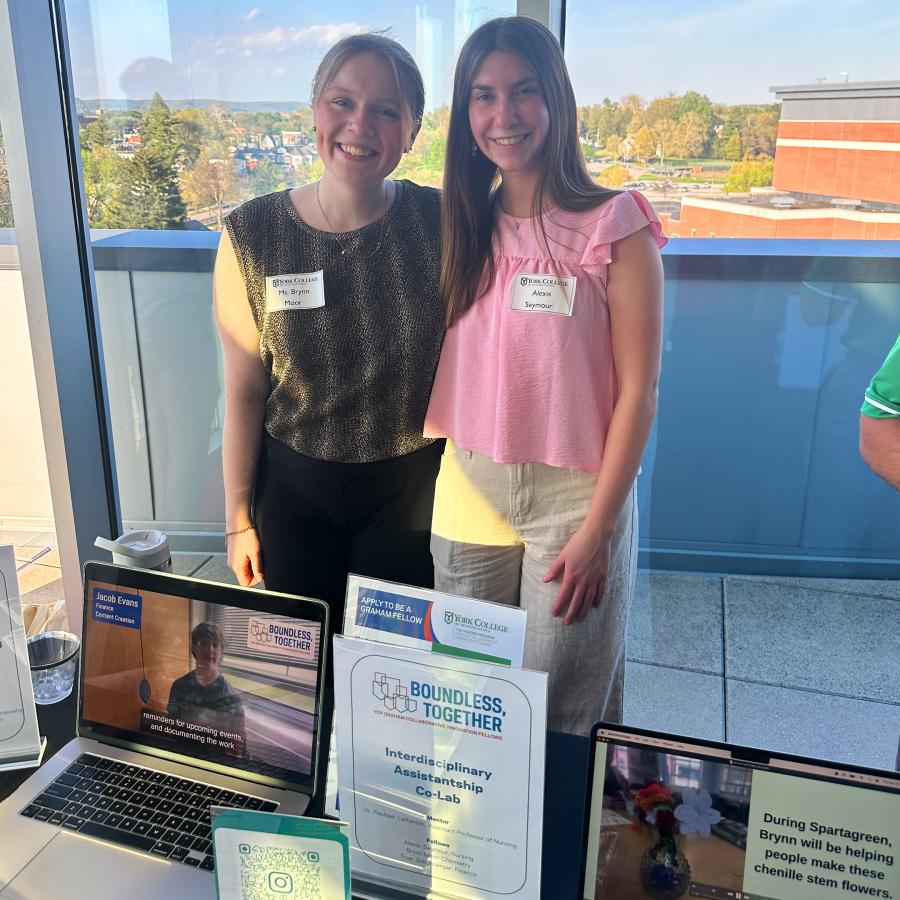
- Brynn Moor ‘28 (Chemistry) paired with Amber Herb, Director of Education at Creative York.
None of these placements were designed to reinforce what students already knew. They were designed to stretch it.
The Outcome No One Measures
If you asked a traditional program to define success, it would point to deliverables: completed projects, demonstrated competencies, and measurable skills.
Those outcomes existed here, but they were not what mattered most.
The most consistent and meaningful outcome across all three students was the relationship.
Not the task.
Not the project.
The person.
Each student walked away with a connection to someone they would have never encountered. Someone who challenged their thinking, expanded their perspective, and, in many cases, reshaped how they understood their own future.
For Alexis Seymour, that impact was deeply personal. Reflecting on her experience, she shared:
“Every time I asked Liz how her day was going, she always responded the same way— ‘You know it’s good.’ She taught me that your attitude is what you make it. I have dealt with some depression on and off most of my life, and Liz taught me so much more than how to cook. She inspired me to be a more positive person. She really has had a huge impact on my life.”
For Trae Schanberger, the experience reframed how he viewed his own field:
“Jeena does so much, and I learned a lot from her. I even got to meet board members and be a part of creating new things.”
What surprised him most was not just the exposure, but the realization of how much overlap existed between finance and communication—how strategy, messaging, and human connection influence even the most quantitative professions.
For Brynn Moor, the transformation came through unexpected integration. Immersed in arts education, she discovered a passion for cyanotypes and began blending her chemistry background with creative practice, using scientific principles to create art alongside children. What began as an unfamiliar environment became a space where her discipline could evolve rather than remain confined.
“Being a part of the Interdisciplinary Assistantship Co-Lab has really changed me for the better. Not only did I get to learn about running a non-profit, I got to experience the beautiful culture of Downtown York and I got to meet some amazing people at Creative York. Being a part of this group has really expanded my creative side of my mind!”
This kind of learning resists easy measurement. It does not fit neatly into assessment frameworks or grading rubrics. Yet it is precisely what enables graduates to function effectively in complex, interdisciplinary environments.
We say we want students who can collaborate across disciplines. But collaboration is not a skill that develops in isolation. It emerges through meaningful engagement with people who think, work, and see the world differently.
This Is Bigger Than a Program
What becomes evident through experiences like this is that interdisciplinary learning is not simply about adding breadth to a student’s education; it is about reshaping how they understand themselves within it.
Students stop asking, “What am I supposed to do with my major?”
And begin asking, “What becomes possible when I connect what I know with what others bring?”
That shift is not subtle. It is foundational.
Because the individuals who will lead and innovate are not those who remain narrowly defined by their discipline, but those who have learned how to navigate beyond it. Innovation is the catalyst for meaningful change, and it is cultivated through experiences that push students to think beyond their discipline and collaborate across perspectives, preparing them to shape a more connected and adaptive world.
A Challenge to Higher Education
If higher education is serious about preparing students for the realities they will face, then experiences at the edges cannot remain optional. They must be intentional.
Not more content.
Not more specialization.
More integration.
More exposure.
More opportunities for students to encounter perspectives that disrupt their assumptions.
Opportunities like the Interdisciplinary Assistantship, embedded within programs such as the Graham Fellows, are revolutionizing the learning experience for college students.
Because the true value of education is not confined to what students know. It is shaped not by the boundaries of a major, but by the moments that challenge perspective, expand connection, and push students beyond what they thought they knew. And those very relationships expand what they believe is possible.
Final Reflection
As the faculty mentor for the Interdisciplinary Assistantship, the most meaningful aspect of this experience was not watching the students complete projects or meet predefined outcomes. It was watching them step into discomfort and stay there long enough to grow. It was watching them build relationships they would have otherwise never formed, challenge assumptions they didn’t realize they held, and return to their own disciplines not diluted, but strengthened, even more adaptable, more confident, and better prepared for the complexity of the work ahead.
So perhaps the better question is this:
How far are you willing to step beyond what you know to become better at what you do?
Because the students who are willing to do so, who embrace the unfamiliar, engage across differences, and build connections beyond their field, are the ones who will not only navigate their careers more effectively, but shape them.
And that is where the most meaningful education happens—at the edges.