Beyond the Lab: GCCI Grant Awardees Are Redefining Next-Gen Education
What happens when you blend engineering and foreign language studies?
Drs. Ashley Earle and Mary Boldt have embarked on a new collaborative project to find out! Supported by a new GCCI grant, How It Was Made engages engineering students in foreign language studies to prepare them for an end-of-semester trip to Germany.
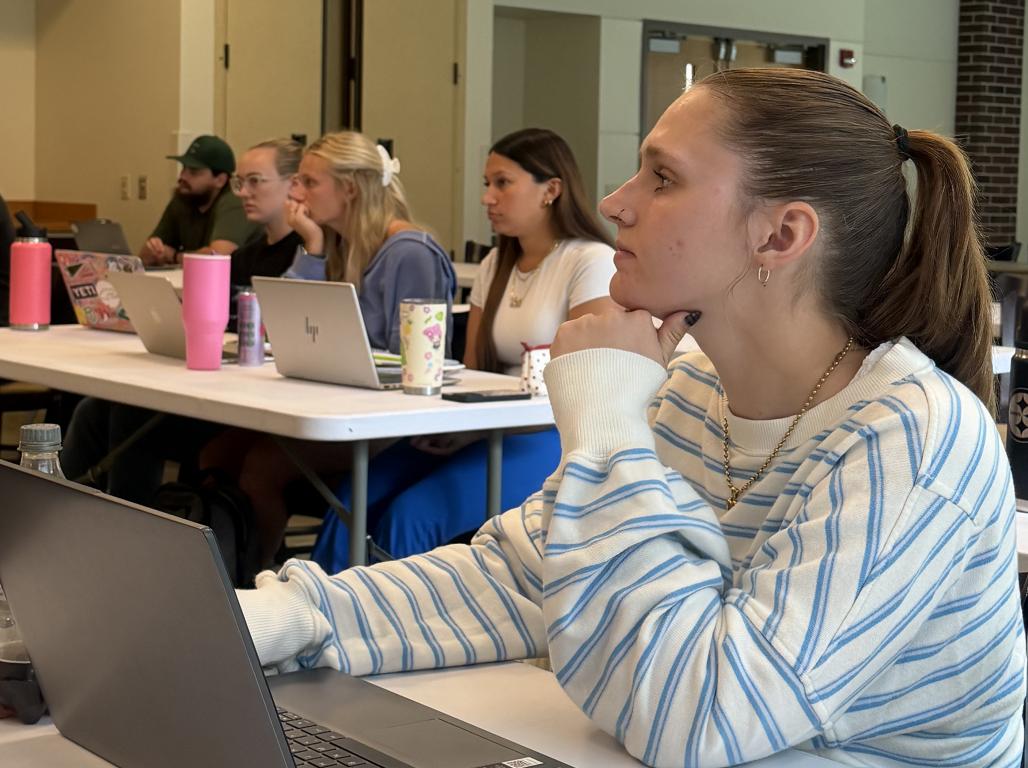
Inspired by a presentation by Rowan University’s Dr. Bakrania at the Engineering Liberal Education Conference, Dr. Earle and Boldt designed an interdisciplinary, cross-institutional program that explores the relationships between engineering, culture, language, and social power. Collaborating with Dr. Bakrania on the content, Dr. Earle is leading Mechanical Engineering 472, a course that encourages students to consider different viewpoints and approaches to design and usage. “The best engineering designs come from being able to understand other people’s perspectives,” she offered. “Sometimes you have to be uncomfortable for a while to get at the best solutions.”
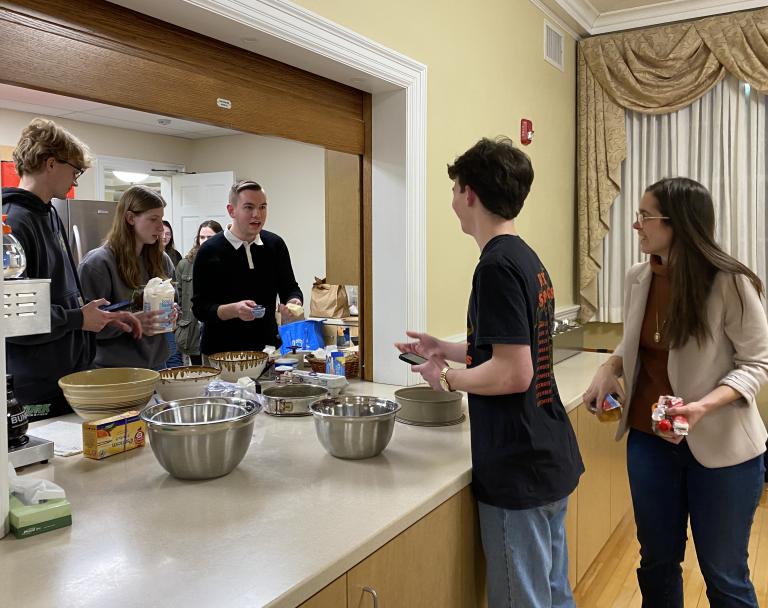
Now, less than five months after their initial meeting, Dr. Earle’s engineering students find themselves preparing for a trip abroad as part of this experimental course model. This includes language lessons through Duolingo, German coffee hours, and cultural presentations. “We live in an interconnected world, and ‘How It Was Made' allows our students to forge connections that will help them thrive in the time and space we share with one another,” said Dr. Boldt.
Both professors are hopeful that the integration will lead to further collaboration across campus. “Working across academic department lines is a dream come true for me,” shared Dr. Boldt, “For my whole career in World Languages and Cultures, I've been a huge advocate of foreign languages and cultures across the curriculum, because students in every field benefit from embracing another language and culture.”
As for the class’s impact on its students, Dr. Earle is hopeful that they will take away the importance of collaboration between cultures. “Engineering doesn't exist in a bubble,” she explained, “There are social, political, economic and even knowledge conditions, human lived experience, actors and larger institutional agents that all work together along with engineers to have built everything that has ever been, and that ever will be, beyond the natural world…There's no better way to check your assumptions of what has to be than to change the cultural script.”
Launched in the Spring 2026 semester, How It Was Made represents a new approach to cross-disciplinary learning. Following a formal evaluation this summer, the project leads will determine how to build on this pilot. This is the first step toward a new model for engineering education, with more partnerships expected to follow.